


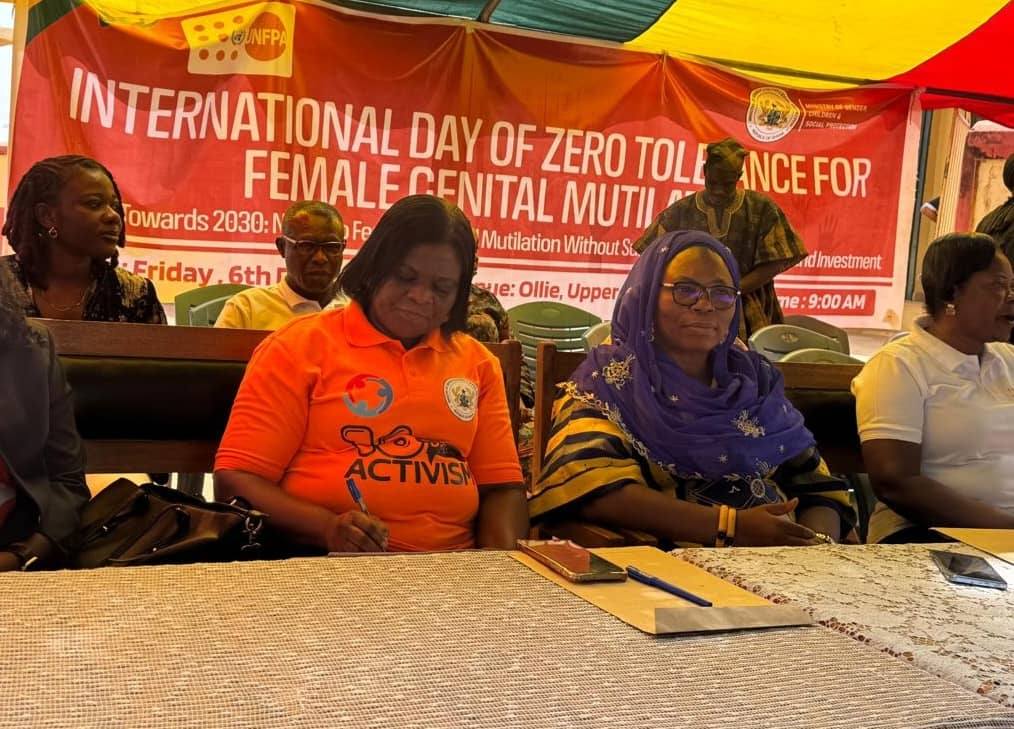
The Ministry of Gender, Children and Social Protection (MoGCSP), through its Domestic Violence Secretariat in collaboration with the United Nations Population Fund (UNFPA) Ghana, joined the global community to commemorate the 2026 International Day of Zero Tolerance for Female Genital Mutilation (FGM) on Friday, February 6, in the Upper West Region.
The commemoration, held under the global theme “Towards 2030: No End to Female Genital Mutilation without Sustained Commitment and Investment,” aimed to raise awareness of the risks associated with FGM, amplify youth voices as agents of change, strengthen engagement with policymakers and traditional leaders, and reinforce monitoring of laws and policies to eliminate the practice.
Delivering the keynote address on behalf of the Minister, Hon. Dr Agnes Naa Momo Lartey, the Director of the Domestic Violence Secretariat, Madam Melonin Asibi, described FGM as a gross violation of the human rights of women and girls. She noted that while Ghana has made progress through legal reforms, community sensitisation, and survivor support, more coordinated and adequately resourced actions are required to achieve zero tolerance by 2030. “Ending this practice is not only a moral obligation but a legal and developmental necessity,” she stressed.
Representing the Upper West Regional Minister, Hon. Charles Lwanga Puozuing, ESQ, the Chief Director of the Regional Coordinating Council, Hajia PogNaa Fati Issaka Korey, urged communities to see FGM not as a cultural matter but as a developmental setback that undermines families, communities, and national progress. She called on opinion leaders to play a critical role in prevention, survivor support, and accountability to drive social change.
UNFPA’s representative, Madam Selina Owusu, pledged the organisation’s continued support to the Ministry and the Domestic Violence Secretariat, highlighting plans to strengthen community monitoring and integrate FGM prevention into health and education services.
The event featured survivor testimonies, cultural performances with anti-FGM messages, exhibitions of community-led initiatives promoting alternative rites of passage, and discussions on health and human rights perspectives.
The International Day of Zero Tolerance for FGM provided a strategic platform to galvanise action, renew collective commitment, and strengthen accountability towards ending the practice in Ghana and across the globe.
Leave a Reply