


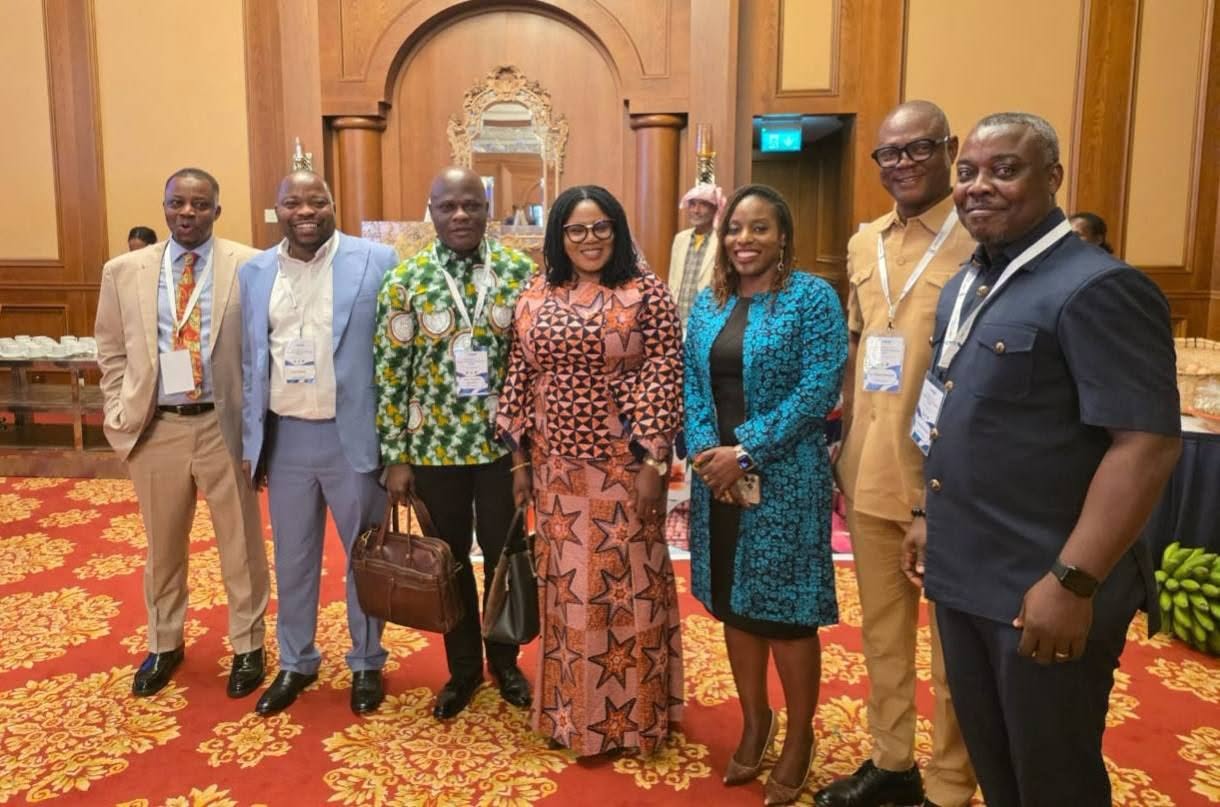
The Minister for Gender, Children and Social Protection, Hon. Dr. Agnes Naa Momo Lartey, has led a Ghanaian delegation to participate in the Knowledge Exchange and Closing Event for Ethiopia’s Productive Safety Net Programme Phase Five (PSNP 5).
The high-level gathering brought together ministers, policymakers, development partners, civil society organizations, private sector actors, and social protection experts to reflect on the achievements of PSNP 5 and share lessons on building resilient and inclusive social protection systems across Africa.
Discussions centered on how social protection programmes can evolve beyond immediate assistance to create sustainable pathways out of poverty through productive employment, entrepreneurship, and economic inclusion, particularly for women.
Speaking during a panel session themed “Out of Poverty into Jobs: Advancing Women’s Economic Empowerment in Social Protection Programmes”, Dr. Lartey emphasized that social protection must be viewed as an investment in human development and economic growth rather than a cost.
Drawing on Ghana’s experience, she highlighted the role of the Ghana National Household Registry (GNHR) in strengthening the targeting of beneficiaries under the Livelihood Empowerment Against Poverty (LEAP) Programme. She explained that GNHR data, complemented by community validation, has enhanced credibility in beneficiary selection while reducing inclusion and exclusion errors.
The Minister further underscored the importance of institutional coordination, citing collaboration with the Ministry of Local Government, Decentralization and Rural Development to strengthen district-level coordination, and with the National Health Insurance Authority (NHIA) to ensure LEAP households benefit from free enrolment onto the National Health Insurance Scheme (NHIS).
She disclosed that following the recent LEAP reassessment exercise, the Ministry engaged the Bank of Ghana to temporarily onboard eligible beneficiaries while steps are taken to secure Ghana Cards for those yet to be registered. This intervention, she noted, was necessary to ensure vulnerable households are not excluded from financial services due to national identification requirements.
On women’s empowerment, Dr. Lartey described financial inclusion as a “game changer” in moving beyond gender sensitivity towards genuine gender transformation. She pointed to Ghana’s integration of complementary services into social protection programmes, including productive inclusion initiatives that support women to establish and expand income-generating activities such as petty trading and micro-enterprises.
She also stressed the need to confront harmful social norms and cultural barriers that limit women’s economic participation, while showcasing Ghana’s achievements in strengthening the GNHR, reforming LEAP, and passing landmark social protection legislation to provide a stronger legal framework for interventions.
Responding to a question from a Gambian participant on challenges with securing unique identification for women, Dr. Lartey acknowledged Ghana’s own hurdles but noted that strong coordination among government institutions and development partners has enabled significant progress in expanding access to identification systems and social protection services.
She called for stronger collaboration among African countries, increased investment in graduation-focused social protection programmes, and the continued sharing of innovations to accelerate poverty reduction and women’s economic empowerment across the continent.
Ghana’s participation in the event reaffirmed the country’s commitment to building inclusive social protection systems that empower vulnerable populations, particularly women, to achieve sustainable livelihoods and economic independence.
Leave a Reply