


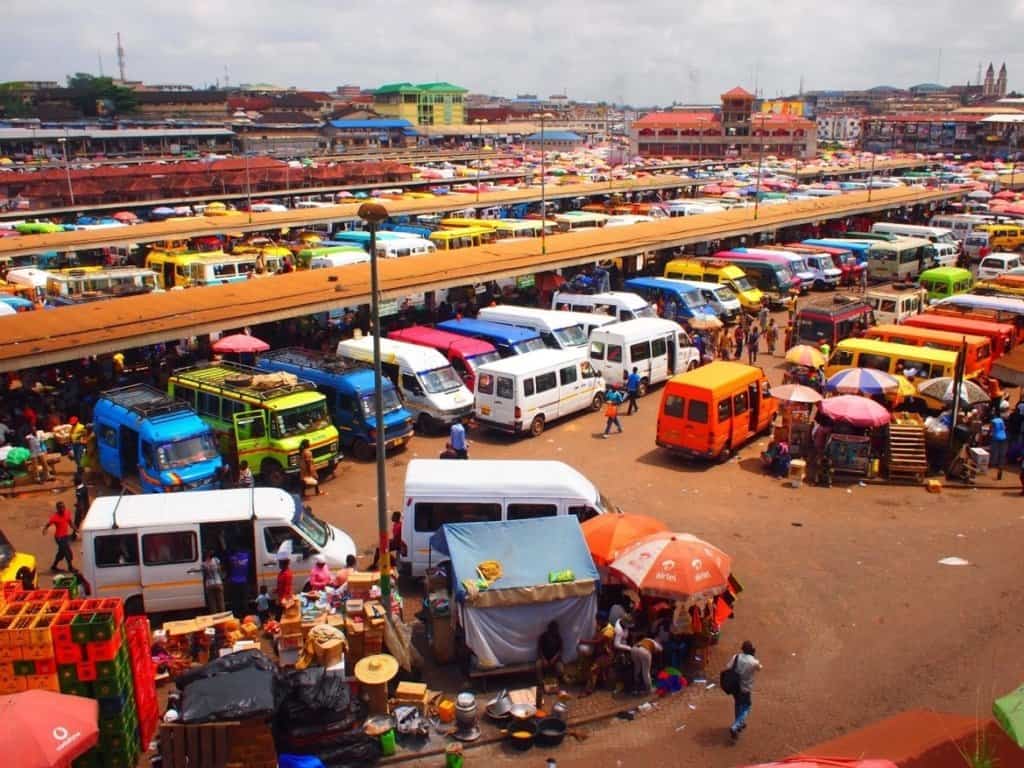
CUTS International, a prominent public policy think tank and consumer protection advocate, has called on the Government of Ghana to take decisive action against commercial drivers who refuse to implement the recently announced 15 percent reduction in transport fares.
The organization is urging the government to empower Metropolitan, Municipal, and District Assemblies (MMDAs) to deregister and ban non-compliant drivers, ensuring consumers fully benefit from falling fuel prices.
The directive for a 15% lorry fare reduction, issued by the Ghana Private Road Transport Union (GPRTU), officially took effect nationwide on Saturday, May 24, 2025.
However, some transport unions and drivers have reportedly declined to implement the new fares, citing various unrelated operational concerns. CUTS International views this resistance as exploitative and deeply unfair to the commuting public.
“Fuel prices have dropped significantly, and GPRTU has taken the commendable step of recommending lorry fare reductions by 15%,” stated Appiah Kusi Adomako, West Africa Regional Director of CUTS.
”It is only fair that passengers, many of whom are struggling with the high cost of living—should see the benefits of this reduction reflected in their daily transport costs.”
He further stressed, “Transport fares are one of the biggest daily expenditures for millions of Ghanaians. Any attempt to suppress a legitimate fare reduction due to falling fuel prices is simply unacceptable.”
To protect consumers and restore discipline in the transport system, CUTS is proposing a comprehensive three-pronged approach. First, they advocate for the deregistration and banning of defiant drivers.
“MMDAs already have the mandate under local government laws to register and license commercial vehicles operating in their jurisdictions. Government should empower them to revoke the registration of drivers who refuse to comply with the new fare regime,” Mr. Adomako emphasized.
He also suggested that compliant drivers be issued visible stickers as proof of adherence, enabling easy identification and sanctioning of exploitative operators by police and regulators.
Secondly, CUTS International is urging the government to temporarily deploy idle public university buses, such as those from the University of Ghana, KNUST, UCC, and UPSA, along affected routes. Mr. Adomako explained that this measure would “create a buffer for commuters and put economic pressure on defiant operators to reverse course.”
Finally, CUTS stressed that a sustainable, long-term solution lies in significant investment in public mass transportation infrastructure. “Globally, cities like London, New York, Seoul, and Berlin have strong public transport because their governments invest in it. Ghana must do the same,” Mr. Adomako asserted.
He called for the urgent retooling of Ayalolo and Metro Mass Transit (MMT) services, alongside the construction of dedicated bus lanes to improve reliability and efficiency.
A strong state-run transport system can introduce healthy competition, improve service quality, and prevent arbitrary fare hikes,” he added.
Source’: 3news
Leave a Reply