


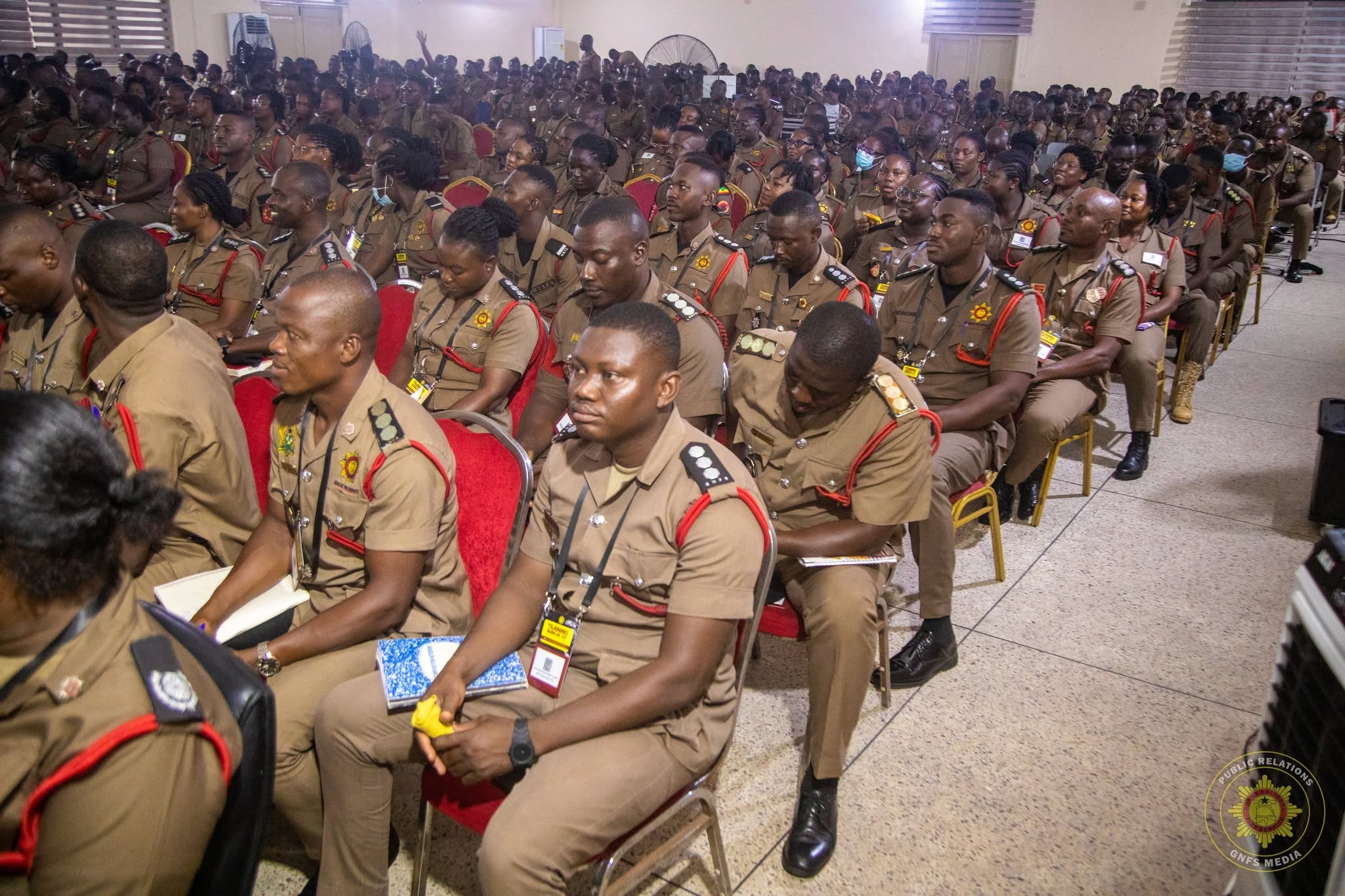
The Ghana National Fire Service (GNFS) has trained Nine Hundred and Eighty-Three (983) officers from five Regional Commands on the Automated Fire Compliance and Safety System (AFCAS), marking a major step in modernising fire safety regulation through technology and digital innovation.
The two-day capacity-building programme, held at the Fire Academy and Training School (FATS) in James Town–Accra, brought together personnel from the Ashanti, Western, Eastern, Northern, and Greater Accra Regional Commands. Organised under the theme “Strengthening Fire Safety Compliance Through Technology, Professionalism and Digital Innovation,” the training aimed to equip officers with the skills to effectively use and manage the AFCAS platform.
The AFCAS system is designed to streamline fire safety certification processes, improve compliance monitoring, reduce administrative bottlenecks, and enhance transparency in service delivery. It is expected to significantly boost regulatory efficiency while making fire safety compliance more accessible and accountable to the public.
As part of the initial rollout, AFCAS will be piloted in the five Regional Commands that participated in the training before nationwide implementation.
Speaking at the closing ceremony, Chief Fire Officer Daniella Mawusi Ntow Sapong commended participants and facilitators for their commitment, describing the exercise as a critical milestone in the Service’s digital transformation agenda. She urged officers to replicate the training at the station level to ensure smooth adoption of the AFCAS platform across all operational units.
“The successful implementation of AFCAS is a strategic step toward modernising fire safety administration. We are counting on officers and the public alike to support this innovation so that together we can prevent avoidable fires and protect lives and property,” she emphasized.
The CFO further called on the public and stakeholders to embrace the initiative, stressing that sustained compliance, cooperation, and shared responsibility are essential to building a safer and more resilient Ghana.
Leave a Reply