


The Ghanaian government has defended its decision to delay the implementation of new conditions of service for nurses, insisting that the move is necessary to prevent economic collapse.
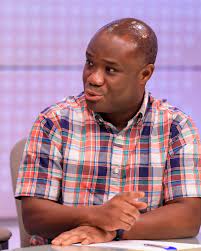
Speaking on JoyNews’ PM Express on Tuesday night, Government spokesperson and Abura-Asebu-Kwamankese MP Felix Kwakye Ofosu addressed concerns over the ongoing strike by the Ghana Registered Nurses and Midwives Association (GRNMA). He stated that rushing to fulfill the agreement without a solid financial strategy would be irresponsible.
“This is about saving the economy. You need a functioning economy before you can meet any of these demands,” Kwakye Ofosu explained. “We cannot make commitments that will destroy the very system we need to fund essential services.”
Nurses’ Strike Hits Second Day
The strike, now in its second day, follows a breakdown in negotiations between the GRNMA and the Health Ministry. At the core of the dispute is the government’s proposal to postpone the implementation of nurses’ revised conditions of service to 2026, a request the GRNMA has firmly rejected.
According to Kwakye Ofosu, financial assessments showed that proceeding with the current agreement would be fiscally unmanageable. “The Deputy Finance Minister has pegged the annual cost at GH¢2 billion. I have seen estimates even higher than that,” he revealed. “The question is, can the national budget absorb this, especially when other public sector workers also have legitimate needs?”
Renegotiation vs. Governance Continuity
Host Evans Mensah questioned why the government had initially agreed to the terms only to seek renegotiation later. In response, Kwakye Ofosu emphasized that governance requires flexibility in decision-making.
“Yes, government is a continuum. But there’s a reason why governments change. If something threatens the economy, you don’t follow it blindly. You take corrective measures,” he argued.
Rejecting accusations of bad faith, he maintained that the agreement was still under discussion and had not reached a final, financially viable conclusion. “You don’t put something in the budget just because it was agreed. Not when discussions were still ongoing and a final, fiscally sound position had not been reached. Otherwise, we’re back to square one—with deficits, debts, and no room to manoeuvre.”
Gov’t Defends Lack of Budgetary Provision
Kwakye Ofosu also responded to criticism that the administration had months to plan but failed to allocate funding for the nurses’ new conditions. He refuted claims of oversight, saying the decision was deliberate.
“It wasn’t a simple oversight. It was a deliberate decision based on economic realities. We cannot afford unbudgeted expenditure of this magnitude.”
Calls for Dialogue Amid Disruptions
Despite the strike, the government insists it is open to further engagement with the GRNMA. Kwakye Ofosu urged nurses to return to the negotiation table, stating, “We are not taking unilateral decisions. We need engagement. And we retain hope that they will come to the table.”
Meanwhile, the Health Ministry has outlined measures to mitigate the impact of the strike. Kwakye Ofosu disclosed that private and some institutional healthcare facilities whose nurses are not participating in the strike remain operational to provide essential services.
He described the situation as unfortunate but reiterated that economic stability must take priority. “This is not about refusing to honour commitments. It’s about how to do so without wrecking the economy. That’s the hard truth.”
Baina Multimedia/Khadijahtu Kubura Kailani
Leave a Reply