


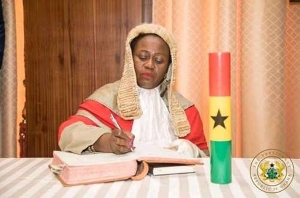
The Supreme Court of Ghana has ruled in a 4-1 majority decision to dismiss a lawsuit filed by the Centre for Citizenship, Constitutional and Electoral Systems (CenCES), challenging the removal process of Chief Justice Gertrude Torkornoo. The decision paves the way for the ongoing investigation into her suspension to proceed.
Lawsuit Against Presidential Action
The suit, filed by CenCES, sought to halt President John Mahama’s suspension of the Chief Justice and stop the work of the five-member committee set up to investigate the case. The organization argued that the President’s actions violated constitutional provisions, particularly Articles 17, 23, 296, and 146 of the 1992 Constitution, which outline equality before the law, administrative justice, and the proper procedure for removing a sitting Chief Justice.
However, the Supreme Court upheld the legality of the President’s decision, ruling that the suspension and inquiry process complied with constitutional provisions.
The Court’s Majority Decision
In a split ruling, four out of five justices ruled in favor of allowing the removal process to continue. Justice Yaw Asare Darko stood as the sole dissenting voice, arguing that the suspension raised concerns about judicial independence and set a dangerous precedent that could lead to political interference in the judiciary.
The majority opinion, delivered by Justices Paul Baffoe-Bonnie, Issifu Omoro Tanko Amadu, Yonny Kulendi, and Henry Anthony Kwofie, maintained that the investigation must proceed, affirming that the removal process follows existing constitutional guidelines.
What’s Next for the Chief Justice?
With the Supreme Court’s ruling, the five-member investigative committee, chaired by Supreme Court Justice Gabriel Scott Pwamang, will continue its inquiry into the matter. The committee’s findings will determine whether Chief Justice Gertrude Torkornoo remains in office or is officially removed.
Legal analysts argue that the ruling could reshape the judiciary’s relationship with the executive, influencing how future Chief Justices and senior judges are appointed or dismissed. Some civil society groups worry that the decision sets a precedent for increased executive control, while government officials maintain that the process ensures accountability in the judiciary.
Public Reactions & Legal Commentary
The ruling has sparked debate among legal scholars, civil society groups, and political commentators. While some see it as a necessary constitutional clarification, others argue that it could weaken judicial independence, making it easier for future governments to remove senior judges.
Political parties have also weighed in, with opposition figures calling for further transparency in judicial appointments to prevent undue influence from executive decisions. Meanwhile, supporters of the ruling argue that the Chief Justice must face a fair and thorough inquiry before any conclusions are drawn.
A Defining Moment for Ghana’s Judiciary?
As the investigation continues, legal experts believe this case could reshape the governance framework surrounding judicial removals. If the committee rules against removal, it may reinforce judicial protections against executive interference. If the removal is upheld, it could mark a turning point in judicial accountability, influencing future administrations.
The final decision remains critical for Ghana’s legal system, setting a precedent for judicial independence and constitutional interpretations in years to come.
Baina Multimedia/Khadijahtu Kubura Kailani
Leave a Reply