


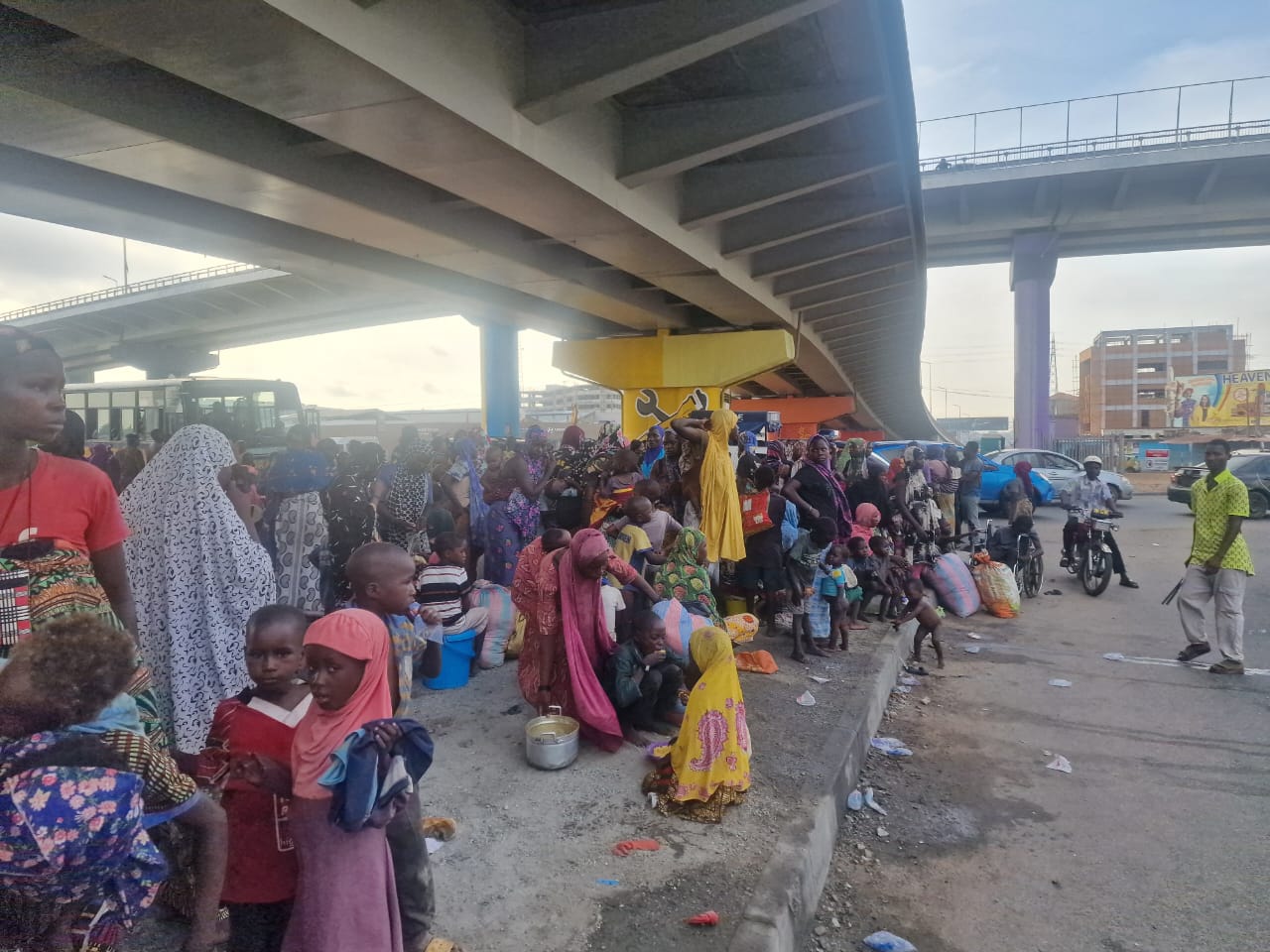
The Ghana Immigration Service (GIS) has launched a sweeping crackdown on foreign street beggars across Accra, detaining over 2,200 individuals in a single day.
The operation, which took place on Friday, May 16, 2025, targeted known begging hotspots, including Sabon Zongo, Nima, Abossey Okai, and Obetsebi Roundabout.
Mass Arrests and Human Trafficking Links
According to ACI Michael Amoako-Atta, Head of Public Affairs at GIS, the crackdown is not just about clearing the streets—it’s about dismantling criminal networks that exploit vulnerable migrants. Authorities suspect that human trafficking rings are cashing in on these activities, using foreign nationals—many of them women and children—as pawns in a larger transnational crime operation.
Who Was Arrested?
The staggering number of detainees includes 909 adults (384 men and 525 women) and 1,332 children (577 boys and 755 girls). GIS officials have confirmed that all detainees are undergoing security and medical screening at the National Headquarters in Accra before repatriation.
Diplomatic Coordination and Public Safety Concerns
Authorities are working closely with foreign embassies to ensure an orderly return of the undocumented migrants. Amoako-Atta revealed that prior discussions with diplomatic representatives had paved the way for a coordinated repatriation effort.
Beyond immigration concerns, GIS officials warn that street begging is becoming a growing trend among Ghanaian youth, particularly schoolchildren who are abandoning classrooms for the streets. “We don’t want them leaving school to beg at traffic intersections,” Amoako-Atta emphasized.
Public Reaction: Mixed Responses
The operation has sparked heated debates among Ghanaians. While some citizens applaud the crackdown, arguing that it will restore order and reduce crime, others sympathize with the migrants, citing economic hardship and displacement as reasons for their presence in Ghana.
One detained migrant lamented, “Finding food has become a serious problem for us. Our husbands and relatives have been killed, and we can no longer stay in our home country. We are here only because we need to survive”.
What’s Next?
GIS has assured the public that all detainees will be treated humanely, with respect for human rights throughout the process. Officials have also hinted at continued operations to maintain what they describe as a productive environment for the Ghanaian public.
As the debate rages on, one thing is clear—Accra’s streets are changing, and Ghana’s immigration policies are taking a firm stance on undocumented migrants.
Baina Multimedia/Khadijahtu Kubura Kailani
Leave a Reply