


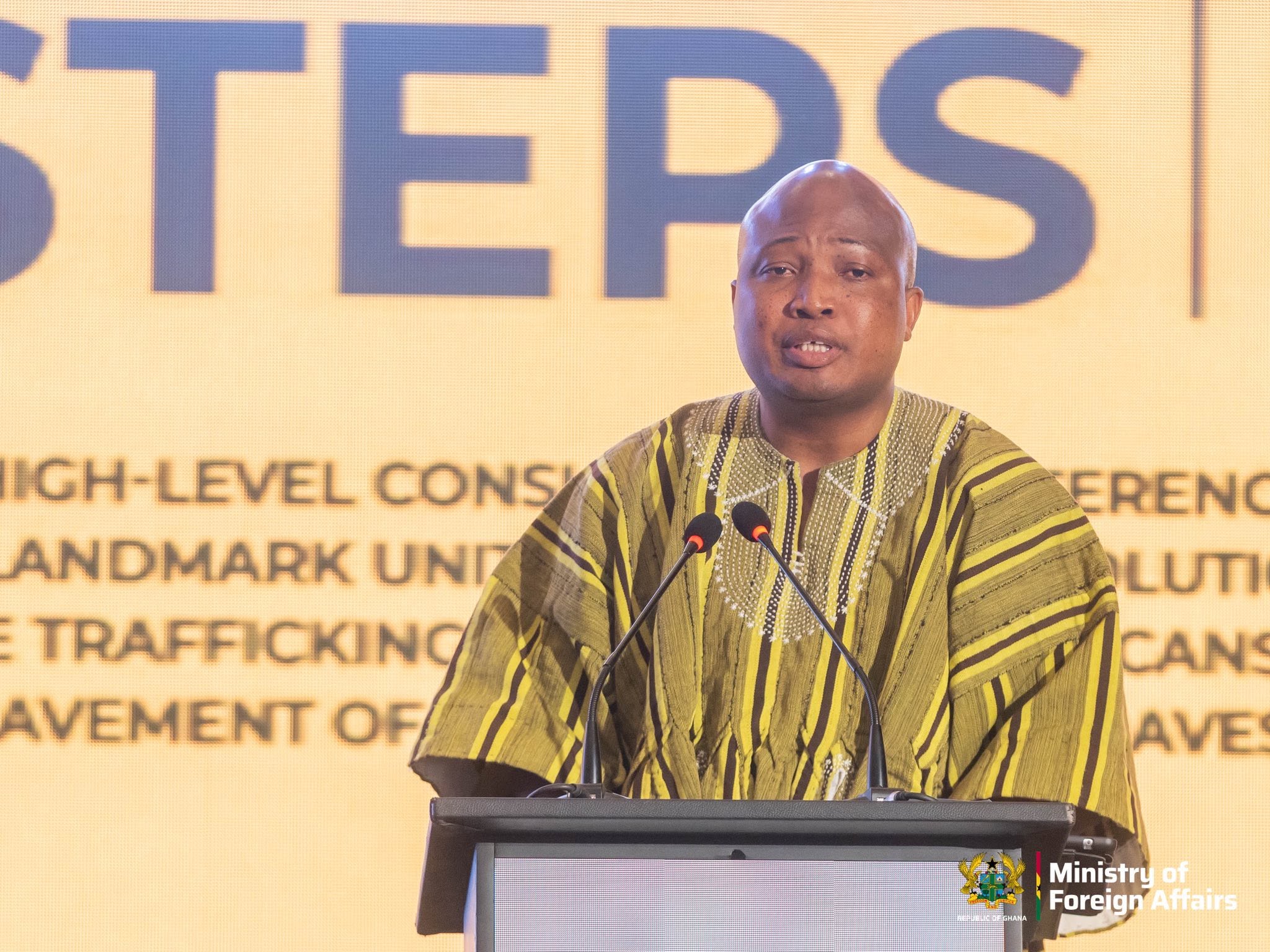
At the High-Level Consultative Conference on the Next Steps to the Landmark United Nations Resolution on the Trafficking of Enslaved Africans, Hon. Samuel Okudzeto Ablakwa underscored the unprecedented global momentum behind the campaign for reparatory justice.
Global Movement for Justice
Hon. Ablakwa expressed confidence that the reparations movement would ultimately achieve its objectives, drawing historical parallels with struggles against slavery, colonialism, and apartheid. He stressed that reparatory injustice, like those past injustices, would be overcome through collective action and perseverance.
The Minister commended President John Dramani Mahama’s leadership in securing the adoption of Resolution A/RES/80/250 and paid tribute to the 123 Member States that supported the initiative at the United Nations General Assembly. He also acknowledged the contributions of scholars, activists, youth groups, and world leaders whose efforts helped secure the landmark outcome.
Defining the Next Phase
Hon. Ablakwa noted that the Accra conference represented the first major global platform convened following the adoption of the resolution, providing an opportunity to collectively define the next phase of the reparatory justice agenda. He observed that discussions on reparations had gained unprecedented traction worldwide, involving governments, legal practitioners, policymakers, community leaders, and citizens seeking pathways for accountability, restitution, reconciliation, and sustainable redress.
Signs of Progress
The Minister highlighted recent developments demonstrating growing international engagement, including:
- Public acknowledgements by religious institutions.
- Actions taken by governments regarding historical accountability.
- Increasing commitments toward the restitution of African cultural artefacts.
Ghana’s Role in Healing
Emphasizing Ghana’s unique historical role, Hon. Ablakwa declared that the country was transforming from a “crime scene” of the transatlantic slave trade into a sanctuary for healing, remembrance, and reparatory justice. He urged participants to approach deliberations with dialogue, partnership, and mutual respect, and called on the international community to move beyond recognition toward concrete outcomes capable of addressing the enduring consequences of slavery and enslavement.
This intervention reinforced Ghana’s leadership in shaping the global reparatory justice agenda, positioning Accra as a hub for dialogue, healing, and forward-looking action.
Leave a Reply