


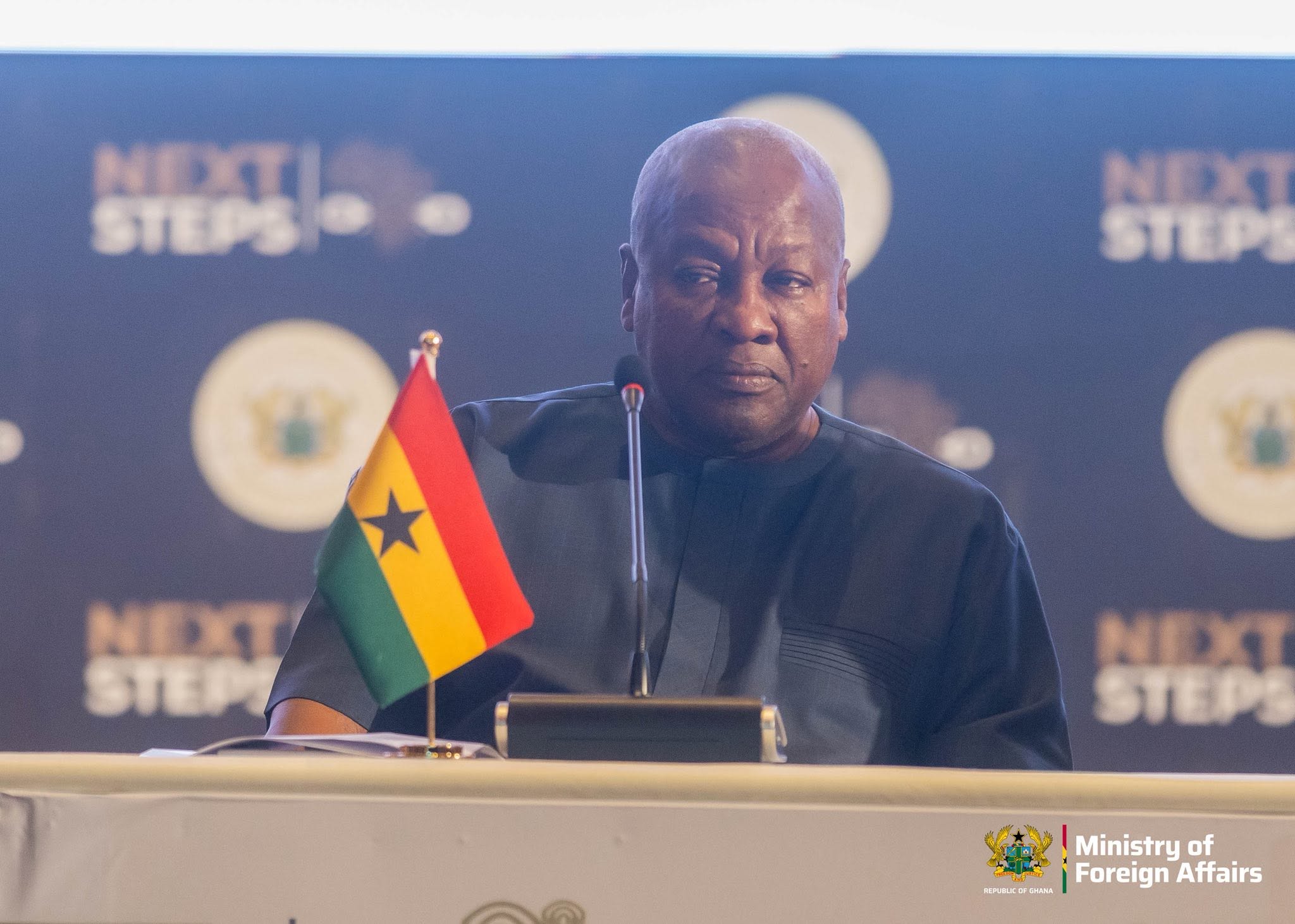
Ghana on Thursday, 18 June 2026, hosted the second day of the High-Level Consultative Conference on the Next Steps to the Landmark United Nations Resolution on the Trafficking of Enslaved Africans at the Kempinski Hotel Gold Coast City, Accra. The gathering brought together Heads of State and Government, Ministers, leaders of international organizations, eminent scholars, legal experts, civil society actors, and representatives of the African diaspora to chart a roadmap for advancing reparatory justice.
Landmark Resolution
The conference follows the adoption of Resolution A/RES/80/250 by the United Nations General Assembly on 25 March 2026. The resolution recognizes the transatlantic trafficking of enslaved Africans and racialized chattel enslavement as among the gravest crimes against humanity, while acknowledging their enduring consequences for Africa and people of African descent worldwide.
Mahama’s Keynote Address
Delivering the keynote, President John Dramani Mahama, who also serves as the African Union Champion on advancing justice and reparations, described the resolution’s adoption as “a defining moment in the international community’s acknowledgement of the scale, brutality and lasting impact of the trafficking of enslaved Africans.”
He expressed gratitude to the 123 Member States that supported the resolution, as well as scholars, faith leaders, civil society organizations, and activists whose sustained efforts made its adoption possible. He emphasized that Ghana’s leadership was rooted not only in diplomacy but in moral responsibility shaped by history and identity.
“We do not seek to reopen old wounds; we seek to heal those wounds,” President Mahama stated, stressing that the pursuit of justice must be guided by truth, understanding, reconciliation, and constructive engagement.
From Recognition to Action
The President underscored that the resolution was not an end in itself but the beginning of a broader international process to address the enduring consequences of slavery. He urged participants to move beyond recognition toward practical and sustained action, noting that the present generation’s responsibility is not to inherit guilt but to dismantle inequalities and structures that remain as legacies of slavery.
Reflecting on Ghana’s unique place in the transatlantic slave trade, Mahama pointed to sites such as Cape Coast Castle, Elmina Castle, Osu Castle and Asin Manso as enduring reminders of humanity’s darkest chapter. He noted that while millions were forced through the “Doors of No Return,” their descendants have returned as leaders, scholars, jurists, and activists, reaffirming the enduring bonds between Africa and its diaspora.
Women at the Centre of Justice
A significant portion of Mahama’s address focused on the experiences of women and girls during enslavement. He highlighted the often-overlooked gendered dimensions of slavery and called for reparatory justice frameworks that recognize the unique suffering, resilience, and contributions of women. He stressed that truth-telling, memorialization, and redress would remain incomplete unless women’s experiences were placed at the centre of historical reckoning.
Global Engagement
President Mahama welcomed growing international engagement on historical justice, citing recent acknowledgements by religious institutions and governments. He emphasized that meaningful progress would require broad-based global participation involving governments, international organizations, legal experts, academic institutions, cultural bodies, civil society organizations, and the African diaspora.
This conference positions Ghana not only as a custodian of memory but also as a leader in shaping the global reparatory justice agenda.
Leave a Reply