


The Ghana Journalists Association (GJA) has expressed deep concern over what it describes as mounting threats against journalists covering the long-running Bawku conflict, cautioning that the situation endangers press freedom, public safety, and national security.
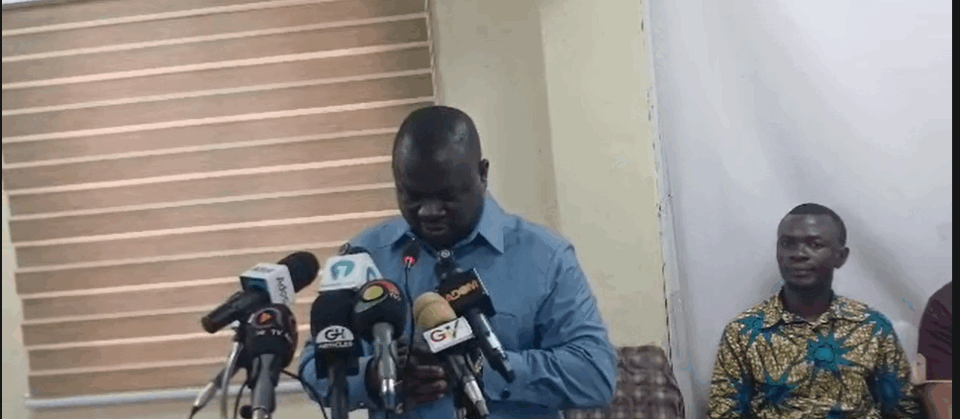
Speaking at a press briefing, GJA President Albert Dwumfuor said the Association is “gravely alarmed” by death threats, incitement to violence, and looming attacks directed at journalists in the Upper East Region, particularly the Regional Chairman of the GJA, Albert Sore, because of their professional reporting on the conflict.
“These threats are reckless, criminal and deeply dangerous—not only to the lives of journalists but also to public order and national security,” Mr Dwumfuor stated.
He explained that journalists covering the Bawku crisis have been branded as enemies, subjected to organized online harassment, and threatened through social media posts, voice recordings, and other digital platforms. Mr Dwumfuor warned that the climate of intimidation could easily spiral into mob violence if swift action is not taken.
The GJA President revealed that the Association had received a detailed account from Mr Sore, outlining how a routine journalistic assignment was deliberately twisted by anonymous actors to incite hostility and issue direct death threats against him and other reporters.
Mr Dwumfuor added that similar threats have previously been made against other journalists working on the Bawku conflict, describing it as a troubling and persistent pattern aimed at silencing the media.
Although the Association has engaged with the Upper East Regional Police Command, Mr Dwumfuor said the persistence of threats shows that current security arrangements are insufficient. The GJA is therefore demanding stronger police protection for journalists at risk, faster investigations, and the arrest and prosecution of those responsible for issuing threats or inciting violence.
“Any harm to a journalist in the course of duty, particularly where prior threats have been reported, would represent a grave failure of protection and accountability,” he cautioned.
He further disclosed that the Association’s National Executive has formally petitioned the Inspector-General of Police (IGP), seeking urgent intervention to safeguard journalists in the region.
Reaffirming that journalists are fulfilling a constitutional mandate in the public interest, the GJA has designated the Bawku conflict zone as an early warning area for press safety. The Association is calling for heightened vigilance, proactive security measures, and continuous engagement with reporters on the ground.
Mr Dwumfuor stressed that the GJA will not accept a reactive posture where action is taken only after harm occurs, warning that any attack on a journalist in the Upper East Region will trigger sustained national and international advocacy until accountability is achieved.
The Bawku conflict remains one of Ghana’s most sensitive security challenges, with journalists playing a vital role in keeping the public informed amid ongoing tensions.
Leave a Reply