


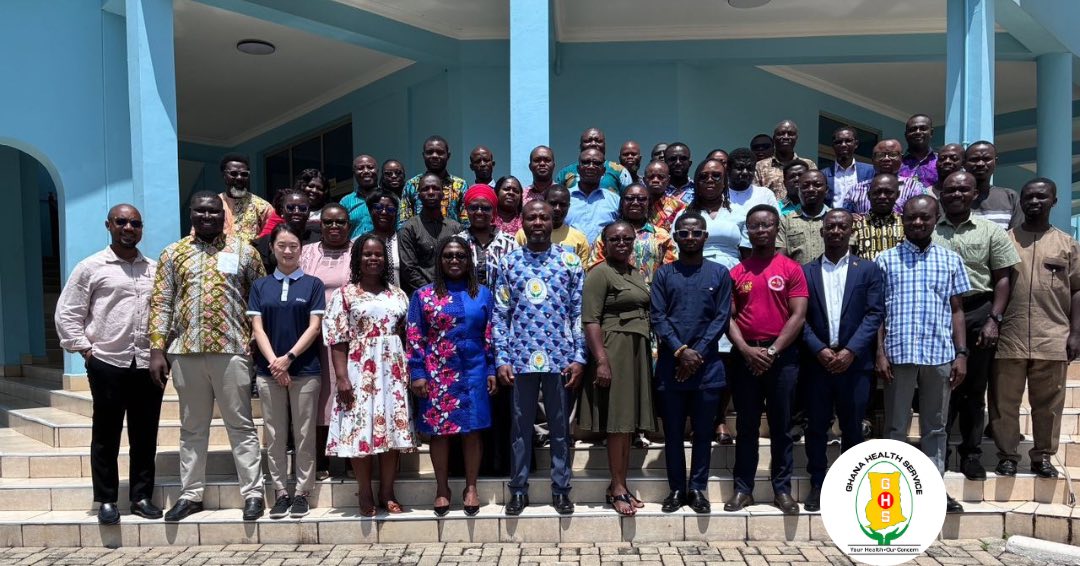
The Ghana Health Service (GHS), through its Disease Surveillance Department of the Public Health Division, has organized a two-day Rapid Response Team (RRT) training to strengthen the country’s preparedness and response to public health emergencies. The initiative, supported by the US Centers for Disease Control and Prevention (CDC), the African Field Epidemiology Network (AFENET), and the Korea International Cooperation Agency (KOICA), forms part of Ghana’s commitment to the International Health Regulations (IHR, 2005).
The training, held in Accra, brought together national and regional RRT members, including Regional Disease Control Officers, Surveillance Officers, Health Promotion Officers, Laboratory Scientists, and Deputy Directors of Public Health. Representatives from the Veterinary Services Division and Environmental Health Offices also participated.
Speaking at the opening session, Dr. Dennis Laryea, Deputy Director of the Disease Surveillance Department, underscored the importance of applying lessons from the training to real-world situations. Delivering his remarks on behalf of the Director of Public Health, he urged participants to embrace a new approach to outbreak management.
“This shouldn’t be one of those trainings you finish, go home and do the same thing you’ve been doing,” Dr. Laryea said. “There should be a change in attitude towards outbreak response, especially as the country continues to battle disease outbreaks like Mpox and others.”
Dr. Joseph Frimpong of the US CDC also addressed the participants, encouraging them to see the program as more than a routine exercise.
“These trainings are opportunities for professional development and continuous improvement,” he noted. “The stronger our rapid response teams are, the better prepared Ghana will be to detect, investigate, and respond to emergencies swiftly.”
The training was designed in line with the Integrated Disease Surveillance and Response (IDSR) strategy, which seeks to build resilient systems capable of addressing both emerging and re-emerging health threats.
Officials say the initiative is part of a broader national strategy to ensure that frontline public health officers are adequately equipped to respond promptly and effectively to disease outbreaks across the country.
Leave a Reply