


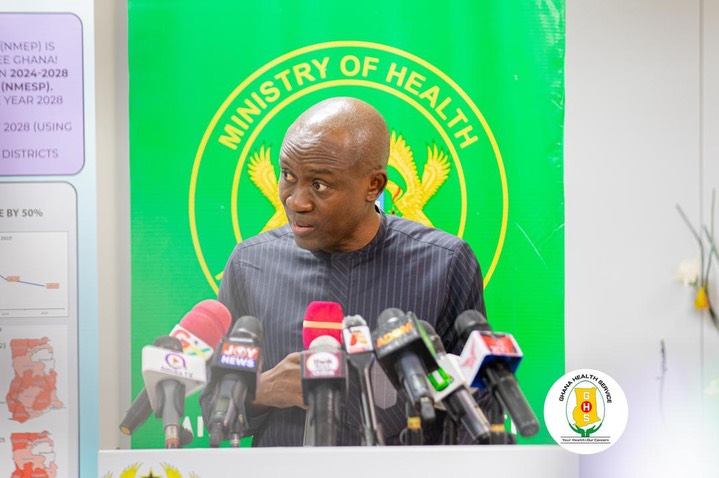
The Ghana Health Service (GHS), through the National Malaria Elimination Programme (NMEP), has reaffirmed its commitment to ending malaria in Ghana, highlighting both progress and persistent challenges at a press briefing held in Accra to mark this year’s World Malaria Day.
Speaking on behalf of the Director-General, the Director of Public Health, Dr. Franklin Asiedu-Bekoe, noted that sustained interventions have significantly reduced malaria cases and deaths nationwide. He cautioned, however, that malaria remains a major public health concern, particularly among children under five and pregnant women.
Dr. Asiedu-Bekoe underscored the 2026 global theme, “Driven to End Malaria: Now We Can. Now We Must,” stressing that Ghana’s current response benefits from unprecedented tools, knowledge, and experience. He credited recent gains to interventions such as insecticide-treated nets, indoor residual spraying, seasonal malaria chemoprevention, and prompt testing and treatment.
Despite these achievements, he warned that funding gaps, climate-related factors, and behavioural barriers continue to threaten progress. He called for stronger multi-sectoral collaboration, urging corporate institutions, private sector actors, and entrepreneurs to support the national malaria elimination agenda. He also appealed to the media to intensify public education on preventive behaviours, including consistent net use, early testing for fever, and environmental sanitation.
Providing further updates, Deputy Programme Manager of NMEP, Dr. Nana Yaw Peprah, announced Ghana’s transition from malaria control to targeted elimination, with plans to eliminate malaria in 21 districts by 2028. He highlighted innovations such as next-generation dual-active PBO nets to combat insecticide resistance, the rollout of malaria vaccines — with over 6.3 million doses administered by late 2025 — and additional clinical interventions for vulnerable groups.
Dr. Peprah disclosed that Ghana has achieved a testing rate of nearly 99% in public health facilities, yet malaria incidence remains high, with an estimated 4.3 million cases recorded. He emphasized the urgent need for improved net usage and early healthcare seeking, noting that declining population immunity could heighten risks.
Concluding on an optimistic note, Dr. Peprah expressed confidence that with sustained innovation, private sector involvement, and strong community ownership, Ghana can achieve a malaria-free status in the coming years.
Activities to commemorate World Malaria Day 2026 will climax with a Health Walk and durbar at the University of Ghana Sports Directorate Park on Saturday, April 25.
Leave a Reply