


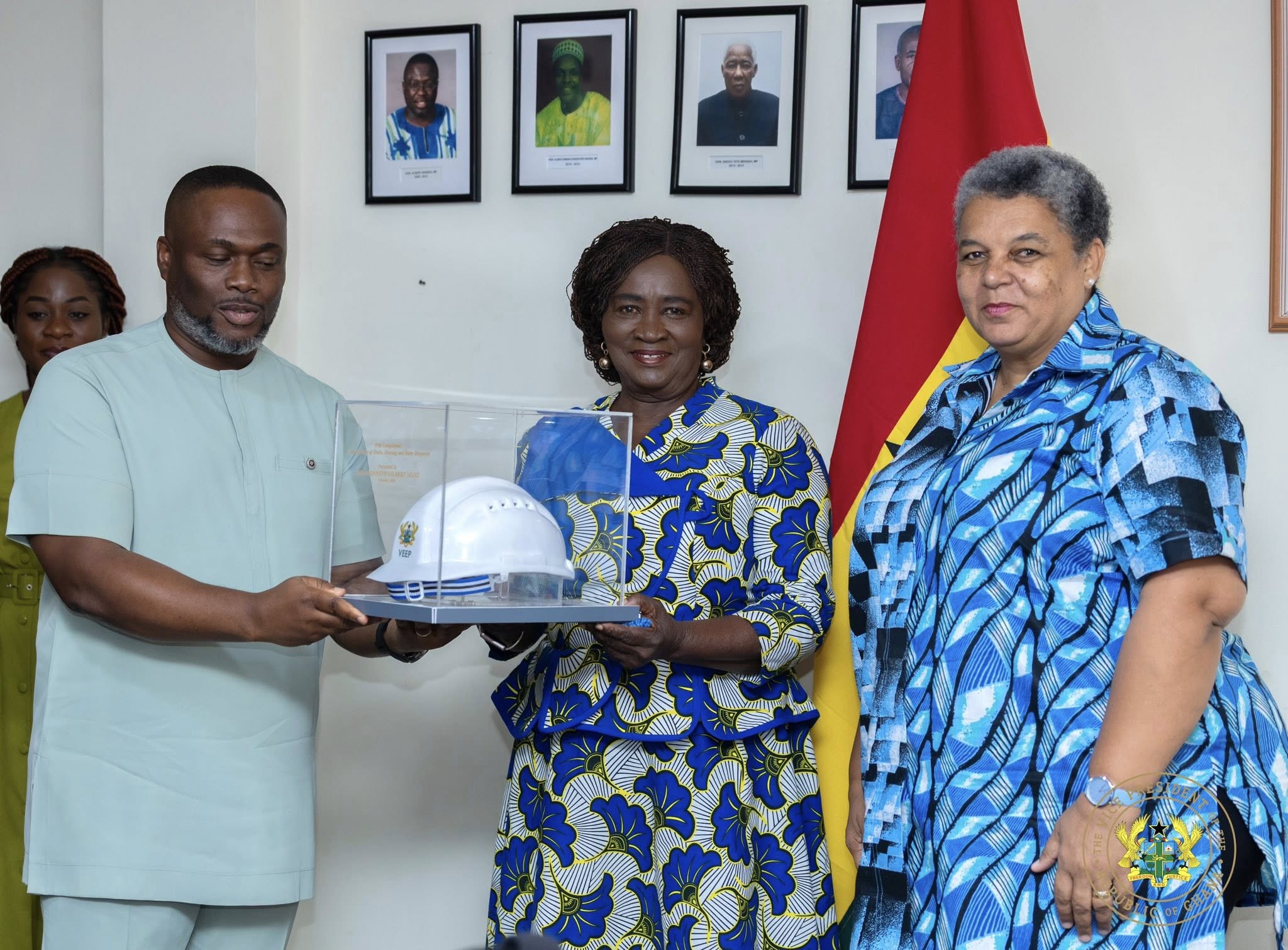
Vice President Jane Naana Opoku-Agyemang has undertaken a working visit to the Ministry of Works, Housing, and Water Resources, where she received briefings on the Ministry’s mandate, progress made, and key challenges.
Led by Hon. Kenneth Gilbert Adjei, the Ministry operates through nine directorates and fourteen departments and agencies, with responsibilities spanning flood control, housing delivery, coastal protection, and water resource management.
Officials outlined ongoing efforts to reduce repeated flooding, including the construction and desilting of storm drains and dredging of the Odaw Channel to improve water flow. Early warning systems and response mechanisms are being strengthened, while coastal protection projects are underway to combat tidal waves and shoreline erosion, safeguarding vulnerable communities.
In the housing subsector, the Ministry reported progress in completing stalled affordable housing projects and deepening partnerships with the private sector to expand access nationwide. Major initiatives include the rollout of the National Homeownership Fund, national redevelopment programmes, and targeted measures to reduce district housing deficits. In response to the Akosombo Dam spill, resettlement efforts are advancing in phases, with a target of 2,225 housing units. The Ministry is also progressing on the National Rental Assistance Scheme, while a review of the Rent Act—aimed at tackling high rent advances and hostel fees—is being prepared for Cabinet approval.
On water resources, officials highlighted persistent challenges linked to pollution from illegal mining and ageing infrastructure. Projects in Takoradi, Wenchi, Keta, and other areas are expected to improve water delivery systems, though the Ministry stressed the need for sustained funding to close sector gaps.
In her remarks, Vice President Opoku-Agyemang acknowledged that some interventions, particularly in flood control and coastal management, may be necessary but unpopular. She emphasised the importance of ongoing communication with affected communities, respectful engagement with coastal fishing populations, and land-use decisions that safeguard future generations. She also encouraged closer collaboration with training and research institutions to develop solutions tailored to Ghana’s environmental, cultural, and regional contexts.
The Vice President commended the Ministry for its progress but challenged officials to intensify efforts. She stressed the need to break down institutional silos and work toward a unified national development agenda that values both visible outcomes and the unseen contributions of public servants.
She reaffirmed Government’s commitment to supporting the Ministry’s work, noting that effective delivery in works, housing, and water resources is essential to protecting lives, strengthening resilience, and advancing inclusive national development.
Leave a Reply