


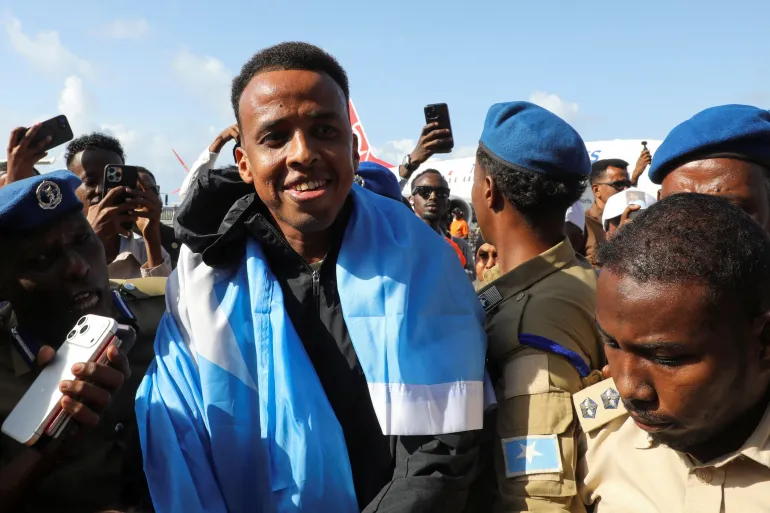
Barely days after Somali football fans celebrated the historic selection of referee Omar Artan to officiate at the FIFA World Cup, hopes were dashed when United States immigration authorities barred his entry.
Artan, Africa’s reigning top referee and the first Somali ever chosen for the tournament, was turned back at Miami International Airport despite holding a valid visa. He had been transiting through Istanbul en route to join fellow referees in training. US border officers cited unspecified “vetting concerns,” contradicting State Department rules exempting major sporting participants from the travel ban.
The decision has provoked anger and disappointment across Somalia and the wider football community. Somali officials said they had pursued “extensive diplomatic efforts” with Washington but failed to secure his clearance. FIFA distanced itself, stating the matter lay within US jurisdiction, though Somali authorities insisted the global body bore responsibility.
Artan’s return to Mogadishu on Wednesday was met with a hero’s welcome. Senior government officials greeted him on the runway at Aden Adde International Airport, while jubilant supporters gathered outside. Addressing the crowd, he struck a defiant tone: “Somalia belongs to all of us. Whether times are good or difficult, I want to tell our youth not to lose hope in our country.”
The Ministry of Youth and Sports expressed deep regret, calling the outcome “a major setback” after years of effort to showcase Somali talent internationally. Sports journalist Mohamed Salad likened the disappointment to “losing a national team at the World Cup,” while former diplomat Abukar Arman condemned the move as politically motivated.
Born in Mogadishu, Artan rose from officiating in the Somali National League to becoming African Referee of the Year in 2025. His breakthrough came at the 2023 Africa Cup of Nations, where his confident style electrified Somali fans. President Hassan Sheikh Mohamud hailed him as “a symbol of inspiration for the new generation.”
For many Somalis, Artan’s exclusion represents more than a personal setback. It underscores the barriers faced by athletes from conflict-affected nations striving for recognition on the global stage. As former sports official Jamaal Shiil noted, “He rose to the top in Somalia, then Africa, and finally reached the World Cup dream. Turning him away sends the wrong message to our youth.”
Despite the setback, Artan’s journey continues to embody resilience and pride. His story remains a reminder of Somalia’s determination to reclaim its place in world sport, even in the face of political obstacles.
Leave a Reply