


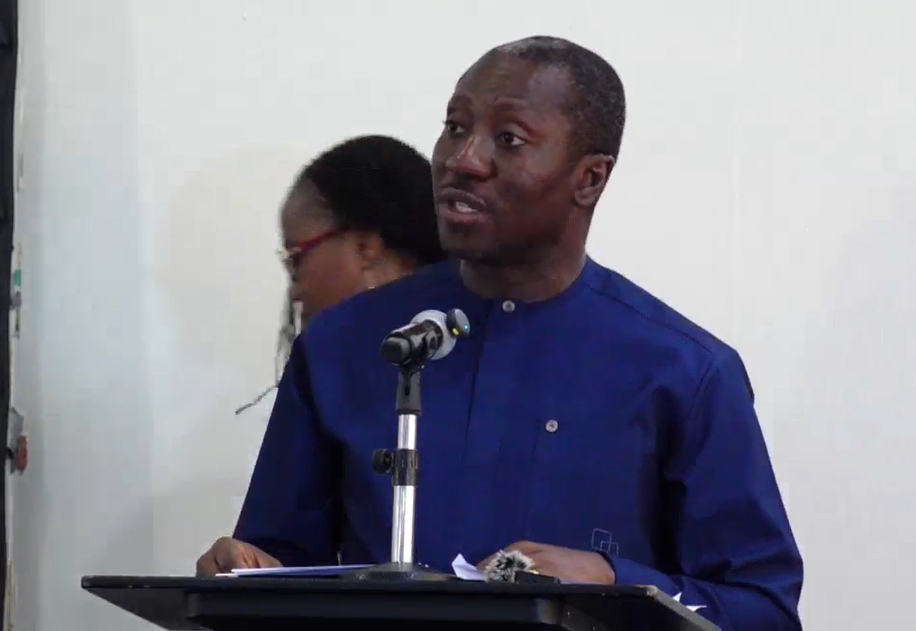
Minority Leader, Alexander Afenyo-Markin, has linked the New Patriotic Party’s (NPP) weakened showing in the 2024 general elections to entrenched internal divisions that discouraged some respected members from voting.
Speaking at the peace pact signing ceremony for NPP presidential aspirants ahead of the January 31, 2026 primaries, Mr. Afenyo-Markin cautioned that disunity carries grave and lasting consequences.
“Factionalism may energise internal contests, but it weakens the party’s capacity to win national elections and to govern effectively,” he said.
He expressed regret over comments by former Minister for Environment, Science, Technology and Innovation, Professor Kwabena Frimpong-Boateng, who revealed that he did not vote in the 2024 elections. “I was saddened to hear the respected Professor Frimpong Boateng say publicly that he did not vote in the 2024 elections. This is what division can do to us. It is unfortunate,” he stated.
According to the Minority Leader, unity must be demonstrated, not merely proclaimed. “Unity is not a slogan, it is a discipline to disagree without destroying one another,” he said. He added that genuine unity requires humility and maturity, especially after internal contests. “It is the humility to accept outcomes we may not like and the maturity to place the national project above personal disappointment,” he noted.
Mr. Afenyo-Markin warned that internal hostilities often rebound against the party in national elections. “Every single insult traded, every unsubstantiated allegation, every attempt to demonise a rival today becomes a weapon in our opponent’s hand tomorrow,” he cautioned.
Describing the peace pact signing as a defining moment, he said the event transcended the mere selection of a flagbearer. “Today is not an ordinary party ritual. It is a test of leadership and patriotism,” he said.
He stressed that the pact must guide party conduct beyond the primaries. “This peace pact is not only about who wins on January 31. It is about whether on 1st February and beyond, the NPP will still be strong, united and credible in the eyes of Ghanaians.”
Mr. Afenyo-Markin noted that the public is closely observing the NPP, a party with a record of significant reforms. “Ghana is watching a party that has, at its best, delivered significant reforms,” he said, citing Free SHS, the National Health Insurance Scheme, and One District, One Factory.
However, he admitted the party is also seen as divided. “Ghana is also watching a party that is anxious, polarised and yearning for competent, honest and visionary leadership,” he added.
He warned that internal divisions have always come at a high cost. “Whenever the NPP is united, it is formidable, and whenever it is divided, it bleeds, and Ghana pays the price,” he said.
According to him, the consequences of disunity extend beyond party politics into national governance. “The internal divisions ahead of the January 31 contest are not confined within the walls of this party. They spill over into the nation’s governance.”
He further cautioned that a fractured NPP weakens Parliament. “A fractured NPP does not only risk losing another election. It weakens Parliament’s ability, especially the Minority’s ability, to stand as a bulwark against excesses, impunity, and bad governance,” he said.
The peace pact, signed by all NPP flagbearer aspirants, is part of efforts to safeguard party cohesion and prevent internal disputes from undermining future electoral prospects. The January 31 primaries will determine the party’s candidate for the 2028 general elections, with observers stressing that early reconciliation and collaboration among aspirants could significantly boost the NPP’s chances at the national level.
Leave a Reply