


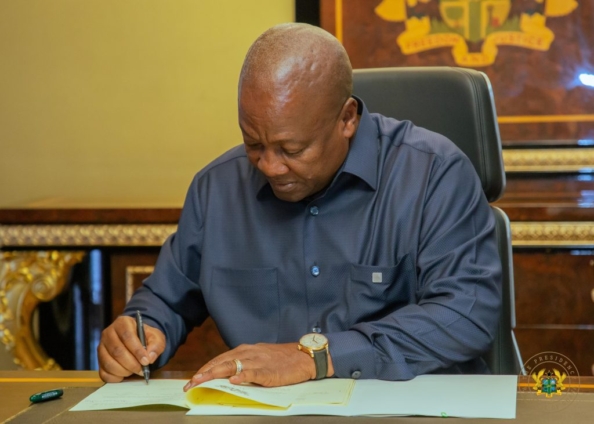
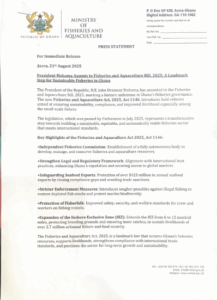
President John Dramani Mahama has signed into law the Fisheries and Aquaculture Bill, 2025, ushering in a new era of sustainable fisheries management in Ghana. The legislation, now officially known as the Fisheries and Aquaculture Act, 2025 (Act 1146), is hailed as a transformative move to protect marine resources, enhance compliance, and improve the livelihoods of millions of Ghanaians dependent on the sector.
Passed by Parliament in July 2025, the Act introduces sweeping reforms aimed at aligning Ghana’s fisheries governance with international standards, safeguarding seafood exports, and restoring depleted fish stocks.
Among the key provisions is the creation of an Independent Fisheries Commission, a fully autonomous body tasked with the development, management, and conservation of fisheries and aquaculture resources. This marks a significant shift from previous oversight structures, promising greater transparency and efficiency.
The Act also strengthens Ghana’s legal and regulatory framework, ensuring alignment with global best practices. This move is expected to protect over $425 million in annual seafood exports, by closing compliance gaps and avoiding potential trade sanctions.
To combat illegal fishing, the law introduces stricter enforcement measures, including tougher penalties for offenders. These steps aim to restore marine biodiversity and ensure long-term sustainability of fish stocks.
In a major win for small-scale fishers, the Act expands the Inshore Exclusive Zone (IEZ) from 6 to 12 nautical miles. This extension is designed to protect breeding grounds and increase catch volumes, directly benefiting the livelihoods of over 2.7 million artisanal fishers and bolstering national food security.
Additionally, the legislation mandates improved safety, security, and welfare standards for crew and workers aboard fishing vessels, reinforcing Ghana’s commitment to decent work and human rights at sea.
The Fisheries and Aquaculture Act, 2025, is widely regarded as a landmark law that secures Ghana’s marine resources, supports vulnerable communities, and positions the sector for long-term growth and sustainability.
Leave a Reply