


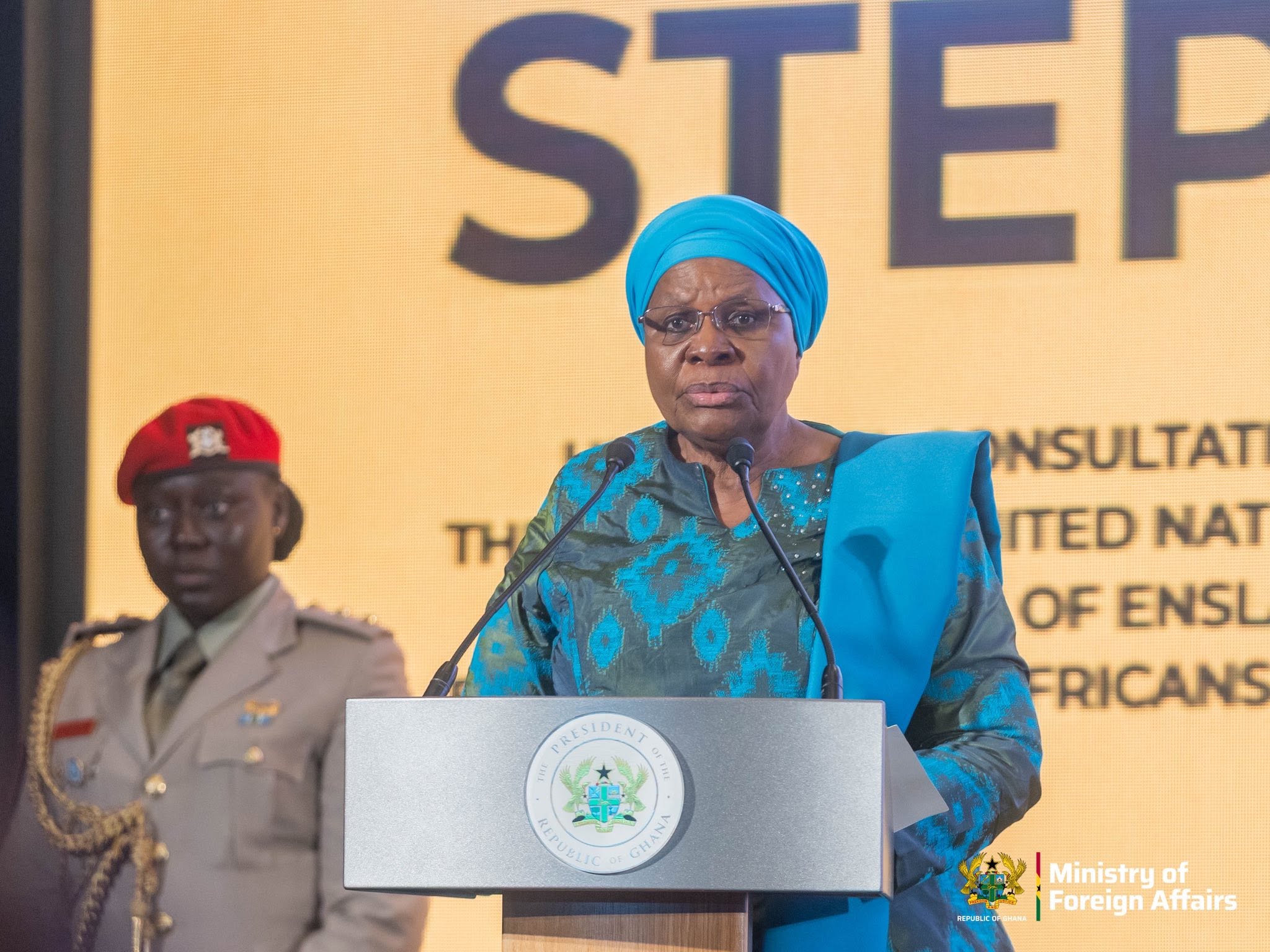
On 18 June 2026, Ghana hosted the second day of the High-Level Consultative Conference on the Next Steps to the Landmark United Nations Resolution on the Trafficking of Enslaved Africans at the Kempinski Hotel Gold Coast City, Accra. The gathering brought together Heads of State and Government, Ministers, leaders of international organizations, eminent scholars, legal experts, civil society actors, and representatives of the African diaspora to chart a practical roadmap for advancing reparatory justice.
Historic UN Resolution
The conference follows the adoption of Resolution A/RES/80/250 by the United Nations General Assembly on 25 March 2026. The resolution recognized the transatlantic trafficking of enslaved Africans and racialized chattel enslavement as among the gravest crimes against humanity, while acknowledging their enduring consequences for Africa and people of African descent worldwide.
Namibia’s President Calls for Action
The President of Namibia, Dr. Netumbo Nandi-Ndaitwah, described the conference as “an important milestone in transforming the UN resolution into practical action.” She reflected on the enduring human impact of the transatlantic slave trade and the painful legacy carried by generations of Africans and the diaspora.
Highlighting Ghana’s historical significance, she noted that the country’s forts and castles remain powerful reminders of the suffering endured by millions, while also symbolizing resilience, resistance, and hope.
Drawing on Namibia’s own pursuit of restorative justice for the genocide against the Herero and Nama peoples, she emphasized that reconciliation can only be achieved through truth, acknowledgement, dialogue, and mutual respect.
Unity and Diaspora Engagement
The Namibian leader further stressed the importance of African unity and solidarity, underscoring that the African diaspora remains integral to the continent’s future. She called for greater efforts to address both the material and psychological legacies of slavery and colonialism, urging Africans to continue reclaiming their history, confidence, and identity.
This conference marks a pivotal step in shaping a continental response to the UN resolution, positioning Ghana as a central hub for dialogue on reparatory justice and historical redress.
Leave a Reply