


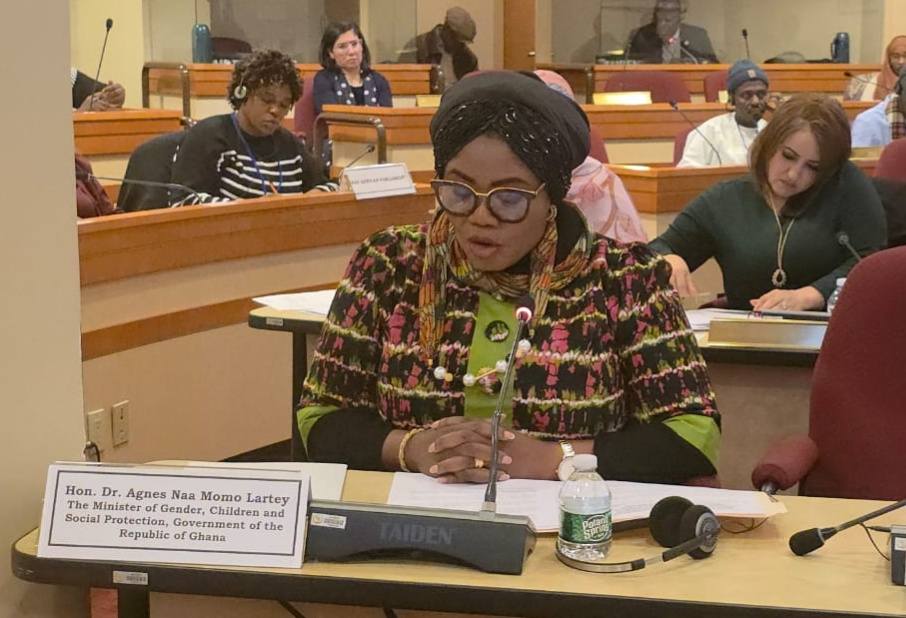
Ghana’s Minister for Gender, Children and Social Protection, Hon. Dr. Agnes Naa Momo Lartey, has called on African nations to enforce affirmative action policies to increase women’s participation in public office. She made the appeal during her closing remarks at a side event on the margins of the 70th Session of the United Nations Commission on the Status of Women (CSW70).
The event, organised by the Pan-African Parliament, AUDA-NEPAD, and the African Women Leaders Network (AWLN), was held at the Nelson Mandela Hall of the AU Permanent Observer Mission in New York under the theme “Strengthening Women’s Public and Parliamentary Leadership to Advance Justice, Laws and Accountable Governance in Africa.”
Dr. Lartey commended the Pan-African Parliament and AUDA-NEPAD for providing the platform for such critical dialogue and praised AWLN for its sustained efforts in advancing women’s leadership across the continent. She acknowledged progress made by African states through legislative reforms and gender-responsive policies, noting that these align with the aspirations of the African Union’s Agenda 2063 and global commitments to gender equality.
Highlighting Ghana’s achievements under President John Dramani Mahama, she cited the passage of the Affirmative Action (Gender Equity) Act, 2024, and the adoption of the National Gender Policy. These frameworks, she explained, address the persistent underrepresentation of women in decision-making and establish a comprehensive basis for mainstreaming gender considerations across national development.
“Transformative change requires both strong legal instruments and effective policy implementation,” she stressed, adding that collaboration among government institutions, parliament, civil society, traditional authorities, and development partners is essential to dismantle structural inequalities and empower women and girls.
In her concluding remarks, Dr. Lartey urged participants to prioritize three key areas:
- Strengthening legal and institutional frameworks to guarantee women’s equal participation in political and public life.
- Tackling structural, social, and economic barriers, including financing disparities, discriminatory norms, and violence against women in politics.
- Investing in the next generation of women leaders through mentorship, education, and leadership development opportunities.
Her call resonated strongly with delegates, reinforcing Africa’s collective responsibility to advance gender equality and ensure women’s full participation in governance and development
Leave a Reply