


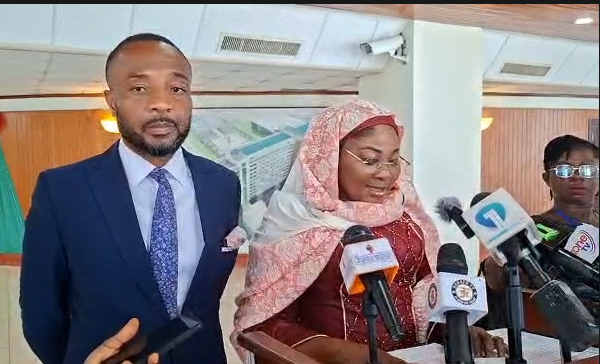
The Minority in Parliament has urged government to immediately settle outstanding fees owed to Ghanaian scholarship students at the University of Birmingham and other institutions in the United Kingdom.
Speaking at a press briefing on March 17, the Member of Parliament for Savelugu, Hajia Abdul Aziz Fatahiya, revealed that the situation has forced some affected students to rely on public food banks for sustenance.
“We are very concerned with troubling petitions from a group of Ghanaian students currently studying at the University of Birmingham in the United Kingdom under the sponsorship of the Ghana Scholarship Secretariat,” she said.
She explained that the petition raises grave issues, noting that “the contents of this petition raise serious concerns about the manner in which the state is honouring its obligation to Ghanaian students studying abroad under the government scholarship program.”
Highlighting the plight of the students, she stressed, “These young men and women did not travel abroad on personal ventures. They left Ghana under the authority and sponsorship of the Republic.”
“They secured admission to pursue advanced studies in fields that are critical to our country’s development. They embarked on this journey, leaving behind families and familiar environments because the state assured them that a financial commitment attached to their sponsorship award would be honoured,” she added.
Underscoring the gravity of the matter, she said, “That assurance was not a favour. It was a promise made by the name of the Republic of Ghana. Yet, today, these students find themselves in a distressing and humiliating situation that should concern every Ghanaian.”
According to the petition submitted to the Minority Caucus, tuition fees for the 2024–2025 academic year remain unpaid, leading the University of Birmingham to withhold transcripts and certificates until arrears are cleared.
“This alone is troubling, but the situation is even more alarming,” she reiterated.
She explained that UK universities operate under strict regulations for international students, warning that unpaid fees could trigger reports to the Home Office, with serious immigration consequences.
“The students have informed us that their visas expired on January 30, in response to efforts to avoid overstaying and breaching UK immigration laws,” she disclosed. “Some of them applied for graduate visas under the post-study work arrangement. However, these applications were declined because their tuition obligations remained unsettled by their financial sponsors.”
The petition, she said, paints a painful picture of hardship: “Many have exhausted their personal savings while waiting for the state to fulfill its obligations. Some have reportedly resorted to food banks simply to meet their basic nutritional needs while struggling to pay for accommodation and other essential expenses.”
Condemning the situation, she declared, “No Ghanaian student sent abroad by the state should be reduced to such indignity.”
She further noted, “The emotional and psychological burden created by this uncertainty is considerable. These students left Ghana with hope, ambition, and a sense of national duty. Today, they face anxiety, embarrassment, and the frightening possibility that their academic journey would be cut short through no fault of their own.”
Despite repeated assurances from the Scholarship Secretariat and Ghana’s High Commission in the UK, she said, no concrete action has been taken.
“We further urge the Ministry of Education and the Ministry of Foreign Affairs and Regional Integration to immediately engage the leadership of the University of Birmingham through the appropriate diplomatic channels to secure temporary administrative relief for the affected students while the financial issues are being resolved,” she appealed.
She also pointed to systemic failings: “A comprehensive review must be taken into the operations of the Ghana Scholarship Secretariat to determine whether structural, financial, or managerial failures have contributed to the current situation.”
The Minority Caucus insists that swift intervention is necessary, stressing that Ghana’s investment in its youth must be matched with consistent support to prevent avoidable setbacks.
Leave a Reply