


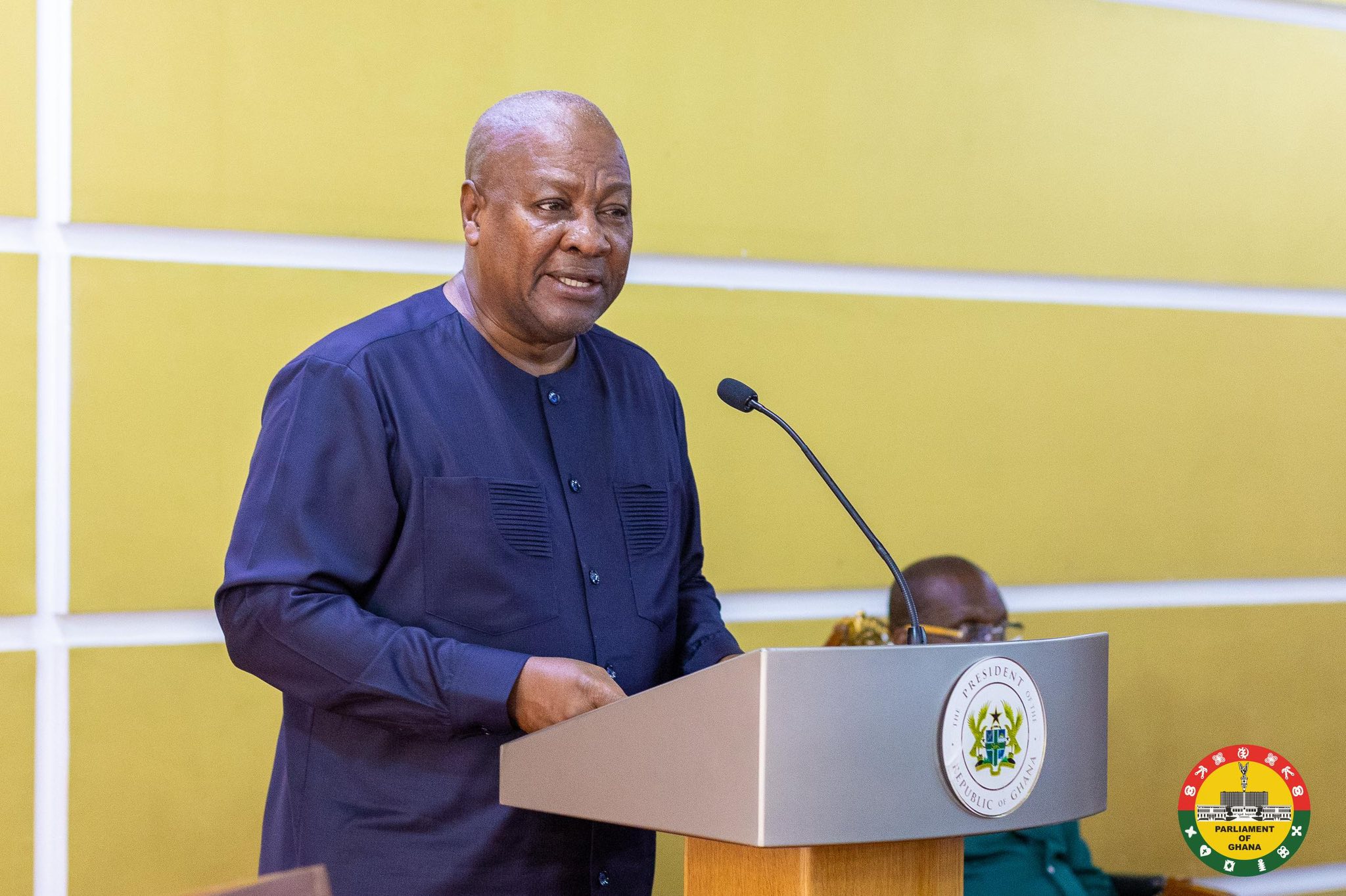
President John Dramani Mahama has underscored that revitalizing Ghana’s publicly owned media institutions demands more than simply upgrading equipment, advocating for a comprehensive approach to ensure their continued relevance in today’s fast-changing media environment.
His remarks were in response to a plea from the Ghana Journalists Association (GJA) President, Albert Kwabena Dwumfuor, who urged swift government action to support struggling state media organizations. Dwumfuor reminded the President of his 2024 campaign commitment to rejuvenate the sector, cautioning that without prompt intervention, its collapse was imminent.
“We need government intervention to save our dying state-owned media from collapsing. Ahead of the 2024 election, the then presidential candidate, John Dramani Mahama, pledged at a media engagement to retool the state media and bring life into it. You even promised that you will under no circumstances privilege it,” Dwumfuor said.
In his response, President Mahama acknowledged the operational and financial hurdles facing state media but emphasized that the challenges extend beyond funding.
“The state media are caught up in the changing media. Because the landscape has changed, and people are consuming information from more sources than before. This means people are reading fewer newspapers, and people want less of the traditional media and getting a lot of their information from short videos and bloggers,” he explained.
He noted that while upgrading infrastructure is necessary, greater attention must be paid to improving content quality and production standards to align with current audience preferences.
“It is not enough to just retool the state media, but also see how we can enhance their production so that they continue to remain relevant. We can take best practices from international news platforms,” President Mahama said, citing the Financial Times and The New York Times as examples of successful adaptation in the digital age.
Leave a Reply