


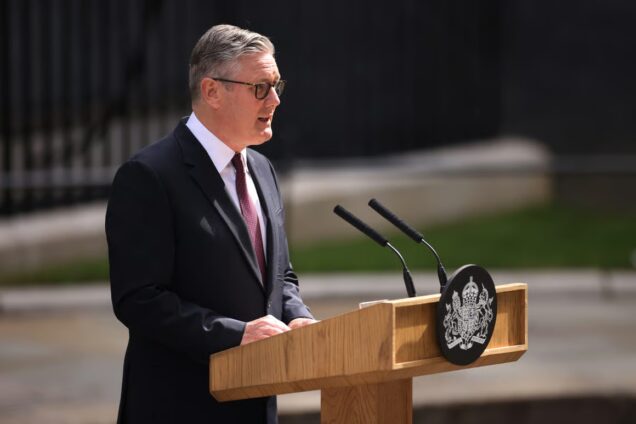
Sir Keir Starmer has announced his resignation as Prime Minister and leader of the Labour Party, setting in motion a leadership contest that will determine the UK’s next head of government.
Speaking outside Downing Street at 09:30 BST, Sir Keir said he had informed the King of his decision to step down, acknowledging that he was “not best placed to lead Labour into the next general election.” He confirmed he will remain in office until a successor is chosen, with nominations opening on 9 July and closing on 16 July. A new leader is expected to be in place before Parliament reconvenes in September.
Sir Keir, accompanied by his wife Victoria, delivered an emotional speech in which he pledged “full and unequivocal support” to his successor. He reflected on his tenure, saying he would now devote more time to his family: “When I leave the biggest job in the country, I shall spend more time on the most important job: being the best husband I can to my fantastic wife Vic… and being the best dad I can to my beautiful children.”
His resignation makes him the shortest-serving Labour prime minister in history, though his time in office exceeded that of Conservative predecessors Liz Truss and Rishi Sunak. Since 2016, the UK has seen seven different prime ministers.
The Contest to Succeed Starmer
Andy Burnham, newly elected MP for Makerfield and former Greater Manchester mayor, is widely seen as the frontrunner. His chances were strengthened when former Health Secretary Wes Streeting, previously considered his main rival, publicly endorsed him. Burnham, greeted with cheers in the Commons after being sworn in, said his priority was to “be sworn in as the MP for Makerfield” before addressing wider questions about a general election.
Burnham has pledged to focus on economic growth, cost of living, housing, and public services. Streeting praised him as a leader capable of “building an inclusive party” and “winning the fight of our lives against the force of nationalism.”
Reactions Across the Political Spectrum
Labour figures including Chancellor Rachel Reeves and former deputy leader Angela Rayner paid tribute to Sir Keir’s leadership, highlighting reforms to employment and leasehold legislation.
Opposition leaders were less charitable. Conservative leader Kemi Badenoch branded him a “terrible prime minister,” while Liberal Democrat leader Sir Ed Davey criticised the “endless merry-go-round of prime ministers.” Reform UK’s Nigel Farage demanded a general election, and Green Party leader Zack Polanski said Starmer had “lost the confidence of the country.”
Sir Keir’s departure follows mounting pressure within Labour after poor election results in May and controversy over policy reversals and appointments, including the fallout from Lord Mandelson’s removal as UK ambassador to the US.
As the Labour Party prepares for a swift leadership contest, the country braces for yet another transition at Number 10 — a reminder of the volatility that has defined British politics in recent years.
Source: BBC
Leave a Reply