


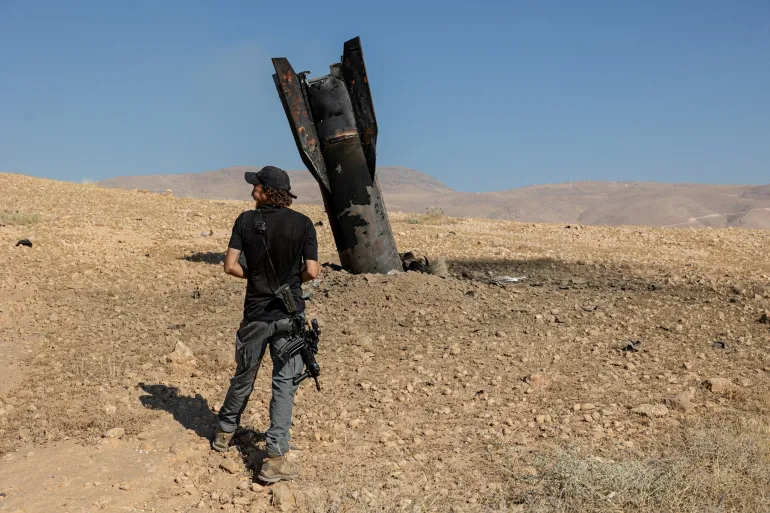
Iran and Israel are reported to have halted the mutual missile and drone attacks that broke out overnight – the first time that the pair has exchanged strikes since a ceasefire took effect in early April.
Iran announced that it was halting attacks on Monday afternoon, but warned that it would resume hostilities if Israel carried out further acts of “aggression and hostility”, including in southern Lebanon.
A little later, Israel media reported that the country would refrain from strikes on Iran at the request of United States President Donald Trump.
The latest exchange of fire has heightened fears of a return to full-scale regional war, which would worsen the global energy crisis and deepen market volatility. Further escalation could also derail ongoing diplomatic efforts aimed at securing a permanent end to the conflict between Iran and the US and Israel.
Despite both appearing to be respecting the halt in hostilities on Monday afternoon, allowing airports across the region to reopen, Tel Aviv and Tehran insist that they are ready to swiftly return to military action.
An Israeli official, quoted by the AP news agency, said it had been agreed to halt airstrikes on Iran upon a request from Trump, but that the offensive in Lebanon would continue “at full force”.
Iranian officials said that in the event that any renewed action by their forces would be required it would be “much more severe” and accompanied by “crushing measures”.
Mutual strikes
Iran launched its first attack on Israel in several weeks on Sunday evening in retaliation for Israeli strikes on the southern suburbs of Lebanon’s capital Beirut.
Tehran had repeatedly warned that it would intervene in support of Hezbollah if Israel targeted the Lebanese capital. The Iran-aligned armed group has rejected the US-brokered ceasefire between Israel and Lebanon.
Despite a reported request from Trump urging restraint, Israel then retaliated with strikes against Iran.
The Israeli military said its air force completed “an extensive strike against strategic defence systems” in Iran. It added that it had targeted facilities at the petrochemical complex in Mahshahr, in the country’s southwest, after earlier carrying out attacks on military sites elsewhere in Iran.
According to Israel media, on Monday Prime Minister Benjamin Netanyahu accepted Trump’s demand to refrain from striking Iran again.
In a post on his Truth Social platform on Monday, Trump said “Israel and Iran must stop ‘shooting’.”
The US president says a deal with Tehran that will re-open the Strait of Hormuz and bring the war to a permanent end is in reach. Unverified reports suggest there has been rising tension with Netanyahu in recent weeks due to Israel’s continued aggression.
Tehran has long insisted that a truce with Washington must include a halt to hostilities in Lebanon.
Since the start of the truce between Iran and the US, Israel has continued attacking its northern neighbour and has, in recent weeks, expanded the area it occupies in the Lebanon south, saying it is acting in pursuit of Hezbollah fighters who continue to fire rockets and drones at northern Israel.
On Monday afternoon, after Iran and Israel announced they were halting strikes against one another, the AFP news agency reported that an Israeli strike had hit a vehicle in Tyre, south Lebanon while the Israeli army intercepted three projectiles fired from Lebanon into northern Israel.
The revived hostilities between Israel and Iran came as Washington and Tehran seek an extension of their ceasefire agreement, aimed at reopening the Strait of Hormuz and easing energy prices, which have surged amid the conflict that began with US-Israel attacks on February 28.
The exchanges of fire on Monday sent Brent crude, the international oil benchmark, jumping back above $97 a barrel.
In an interview with the Financial Times, Trump said the latest flare-up would not affect negotiations with Iran.
“I call the shots. I call all the shots. He doesn’t call the shots,” Trump said, referring to Netanyahu. In a separate interview with Fox News, he said he had told Netanyahu not to retaliate against Iran.
US media reports about a phone call between Trump and Netanyahu last week, where the US president reportedly ordered the Israeli leader to back down from striking Beirut, caused tensions within Israel.
Source: Aljazeera
Leave a Reply