


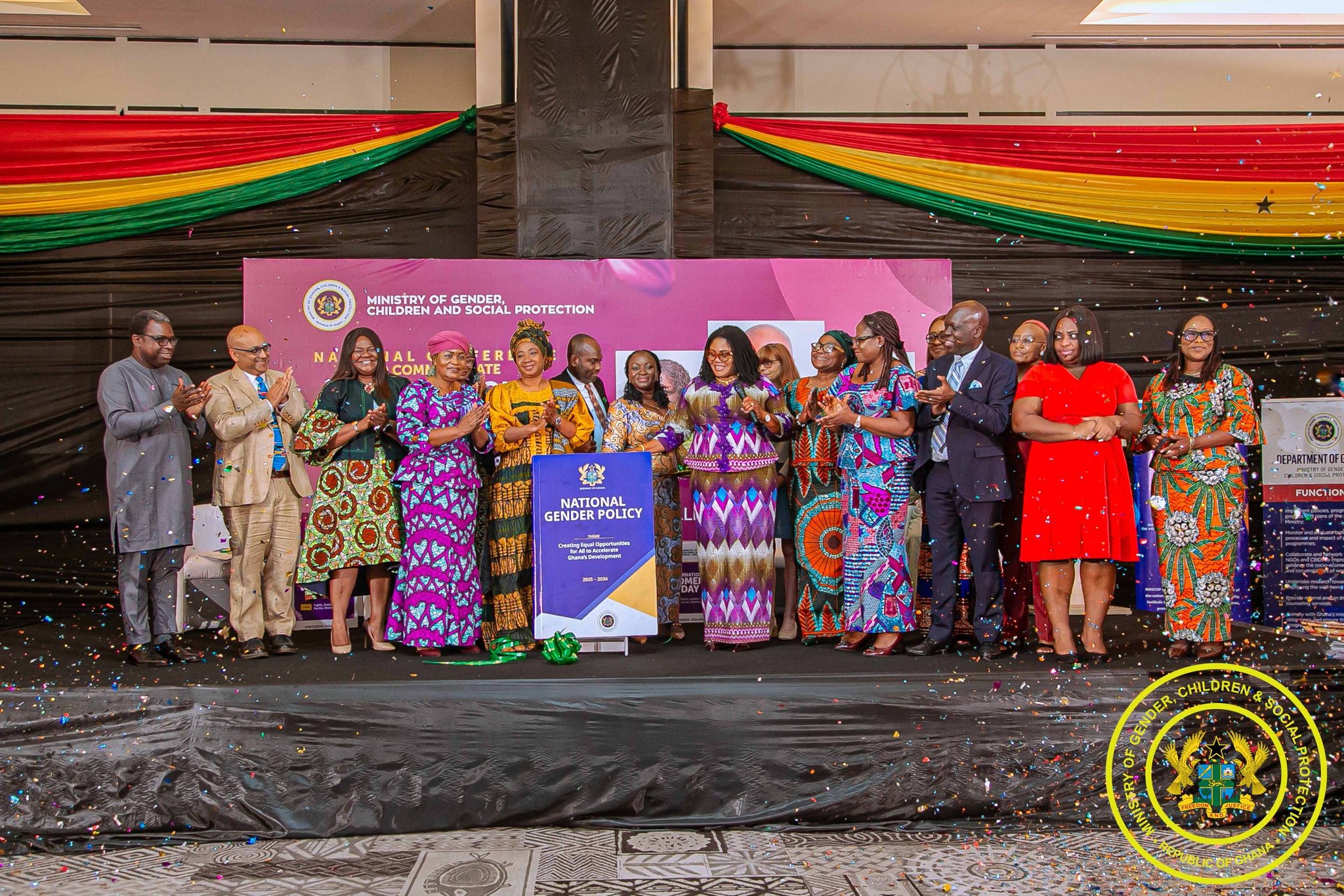
The Ministry of Gender, Children and Social Protection has officially launched the Revised National Gender Policy (2025–2034), reaffirming Government’s commitment to accelerating gender equality and inclusive national development.
Speaking at the launch in Accra, the Minister for Gender, Children and Social Protection, Dr. Agnes Naa Momo Lartey, described the Policy as a transformative national framework articulating Ghana’s vision of a just and equitable society where women and men, girls and boys, have equal access to opportunities, resources, and decision-making power. She emphasised that gender equality is not only a moral obligation but a strategic development imperative essential for strengthening economic growth, social cohesion, and national progress.
Dr. Lartey noted that the revised Policy provides renewed direction for mainstreaming gender across all sectors of governance and development planning. She stressed that deliberate implementation, gender-responsive budgeting, and measurable accountability mechanisms will be critical to ensuring that commitments outlined in the Policy translate into tangible improvements in the lives of women and girls across the country.
Covering the period 2025–2034, the Policy outlines six broad objectives focused on women’s empowerment and livelihoods, access to justice, women’s leadership and accountable governance, expanded economic opportunities, transformation of inequitable gender relations, and safeguards for women and vulnerable groups during emergencies and humanitarian situations. It also reinforces the implementation of key legislative frameworks, including the Affirmative Action (Gender Equity) Act, 2024 (Act 1121).
In her remarks, the Chief Director of the Ministry, Dr. Afisah Zakariah, underscored that effective implementation will require strong institutional coordination, adequate resourcing, and sustained stakeholder collaboration. She reiterated the Ministry’s mandate to lead the mainstreaming of gender equality across Ministries, Departments and Agencies, and called on all institutions to integrate the Policy’s commitments into their sector plans and performance frameworks.
The launch brought together key national stakeholders, including the Chairperson of the Women’s Caucus in Parliament, the Chairperson of the Parliamentary Select Committee on Gender, Children and Social Welfare, representatives of the Judiciary, traditional and religious leaders, members of the Diplomatic Corps, and development partners such as the United Nations system and ActionAid. Development partners commended the Ministry for the inclusive consultative process that informed the revision of the Policy and reaffirmed their commitment to supporting its effective implementation.
The Revised National Gender Policy (2025–2034) will serve as Ghana’s overarching policy blueprint for institutionalising gender equality within national governance and development planning.
Leave a Reply