


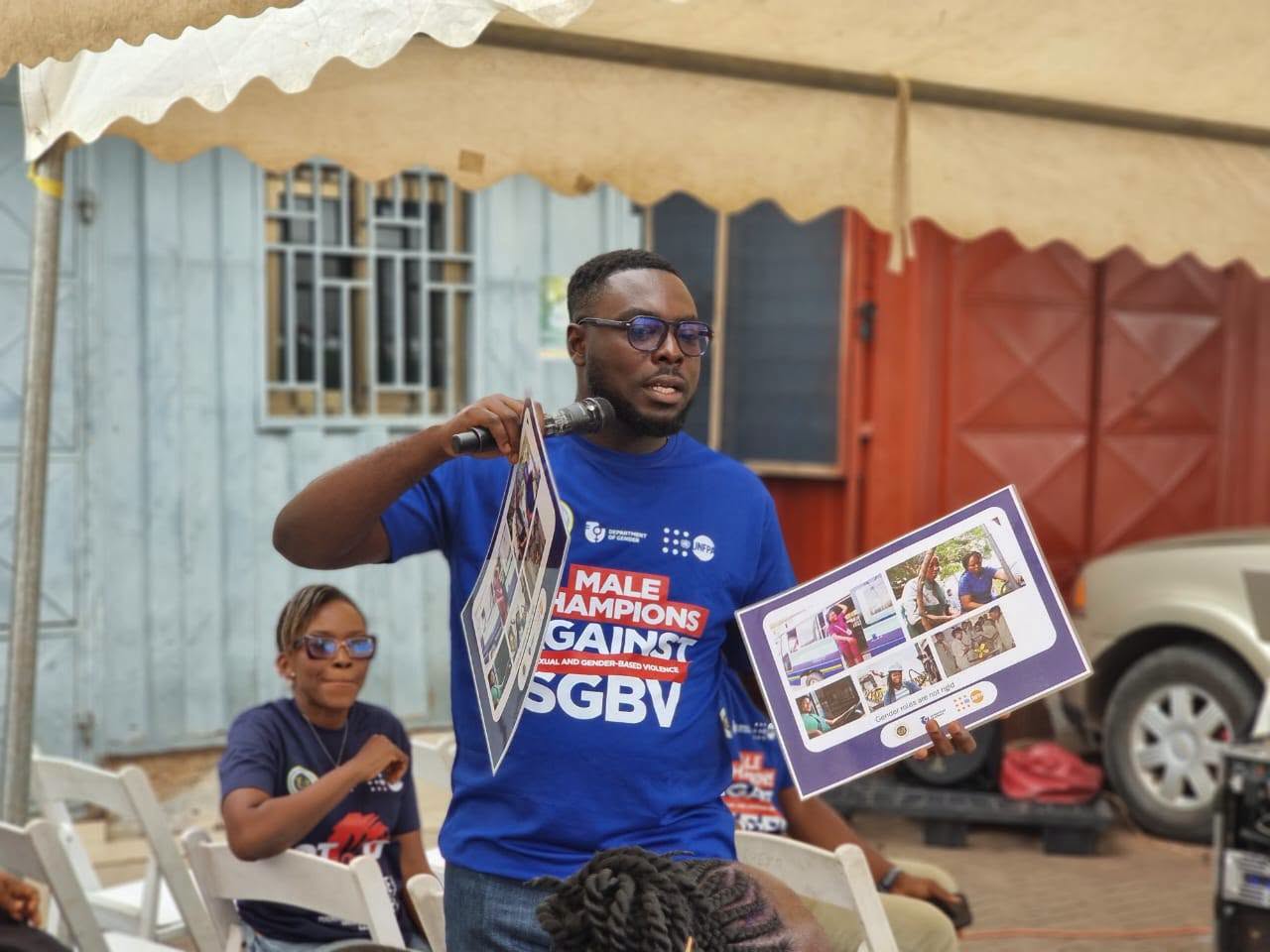
The Ministry of Gender, Children and Social Protection (MoGCSP), through its Department of Gender, has partnered with the Ghana Private Road Transport Union (GPRTU) and received support from the United Nations Population Fund (UNFPA) to hold a dialogue session on gender equality, sexual and reproductive health and rights, and child marriage for drivers, young men, and boys in the transport sector.
The event, held at the Tema Lorry Station in Accra, formed part of ongoing efforts to engage men and boys as key partners in promoting gender equality, protecting the rights of women and girls, and preventing harmful social practices such as child marriage.
Speaking on behalf of the Director of the Department of Gender, Madam Faustina Acheampong, Principal Programme Officer Madam Sabia Kpekata underscored the importance of gender equality as a catalyst for sustainable development. She stressed that achieving equal opportunities requires the active participation of all members of society, particularly men and boys, who play a vital role as advocates and agents of change.
Madam Kpekata urged transport officials to engage their colleagues and organise discussions within their stations and workplaces to promote women’s empowerment. She noted that such grassroots efforts would help build a society where dignity, respect, and equal opportunities are enjoyed by all.
A representative of the GPRTU, Mr. Edward Padie, commended the Ministry and its partners for extending sensitisation to the transport sector. He highlighted the influential role transport operators play in shaping community attitudes and called on drivers, mates, and young men to become advocates against child marriage by supporting efforts to keep girls in school and protect their rights.
Mr. Isaac Mensah, Programme Officer at the Department of Gender, educated participants on SRHR, including access to accurate information, responsible decision-making, consent, and respect for the dignity of women and girls. He also outlined the negative impact of child marriage on education, health, and future prospects.
The dialogue created an interactive platform for drivers, mates, and transport workers to discuss gender-related challenges and harmful stereotypes, while gaining a deeper understanding of their role in fostering respectful relationships and promoting the health, safety, and well-being of women, girls, and their communities.
Leave a Reply