


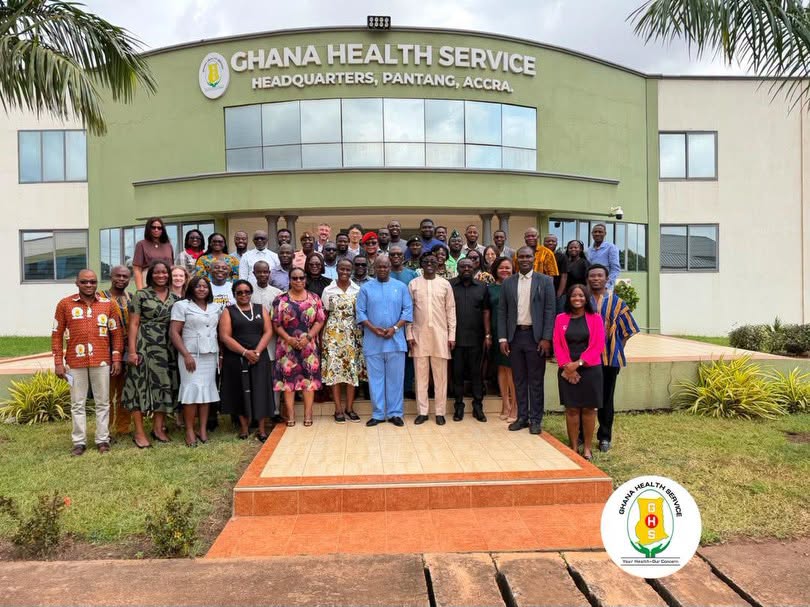
The Ghana Health Service (GHS) has called for stronger connected leadership, effective communication systems and multisectoral collaboration to enhance Ghana’s preparedness and response to public health emergencies.
The call was made at a National Multisector Stakeholder Meeting organised by the National Public Health Emergency Operations Centre (NPHEOC) on the theme “Strengthening Leadership Connectedness, Communications Systems and Multisectoral Collaboration for Public Health Emergency Preparedness and Response in Ghana,” and held at the GHS Headquarters in Accra-Pantang on Thursday, August 20, 2026.
In a formal welcome address, the Director-General of the GHS reflected on some of Ghana’s major emergencies and the lessons they have offered for the country’s emergency preparedness and response architecture.
He recalled the stadium disaster, which exposed significant gaps in Ghana’s emergency response system and contributed to the establishment of the National Ambulance Service. He also referenced the Melcom disaster, noting that although the country’s response had improved, the incident provided further lessons for strengthening emergency preparedness.
The Ebola threat similarly demonstrated that public health emergencies extend beyond the health sector and require coordinated action involving multiple institutions and sectors.
The Director-General stressed that effective emergency response requires not only strategy and technical competence, but also the right leadership approach. He urged institutions and leaders to recognise when they need to step back and allow other appropriately qualified actors to lead.
He described this as “leading from behind,” emphasising that humility is an essential quality of effective leadership during emergencies.
The Head of the National Public Health Emergency Operations Centre (PHEOC), Dr Lawrence Lartey, said the meeting had followed a deliberate progression from reflection to action.
According to him, participants first reflected on the experience of COORDEX I and what it revealed about coordination in practice. This was followed by stakeholder network analysis to examine relationships, institutional connections and communication pathways underpinning Ghana’s emergency coordination system.
The exercise enabled participants to identify areas where connections were strong, existing bottlenecks and opportunities to strengthen collaboration and communication among institutions.
Dr Lartey noted that the most important outcome was the transition from insight to action, with participants identifying practical leadership actions, institutional ownership and follow-up arrangements to strengthen collective preparedness.
Closing the meeting on behalf of the Deputy Director-General, Dr Kwame Amponsah Achiano thanked participants for their active and spirited engagement throughout the meeting.
He cautioned that developing a network map alone would not improve emergency response performance.
Dr Achiano, however, stressed that effective emergency preparedness requires the commitment and ownership of every institution involved. He reiterated the importance of collaboration and reaffirmed the commitment of the PHEOC to working with stakeholders to sustain the momentum generated by the meeting.
He also expressed appreciation to Resolve to Save Lives and other partners for their support towards strengthening Ghana’s public health emergency preparedness and response systems.
The meeting brought together participants from the security services, civil and local government institutions, regulatory bodies, health and allied institutions and other key sectors.
The workshop was facilitated by Resolve to Save Lives via the Connected Leadership Country Initiative.
Leave a Reply