


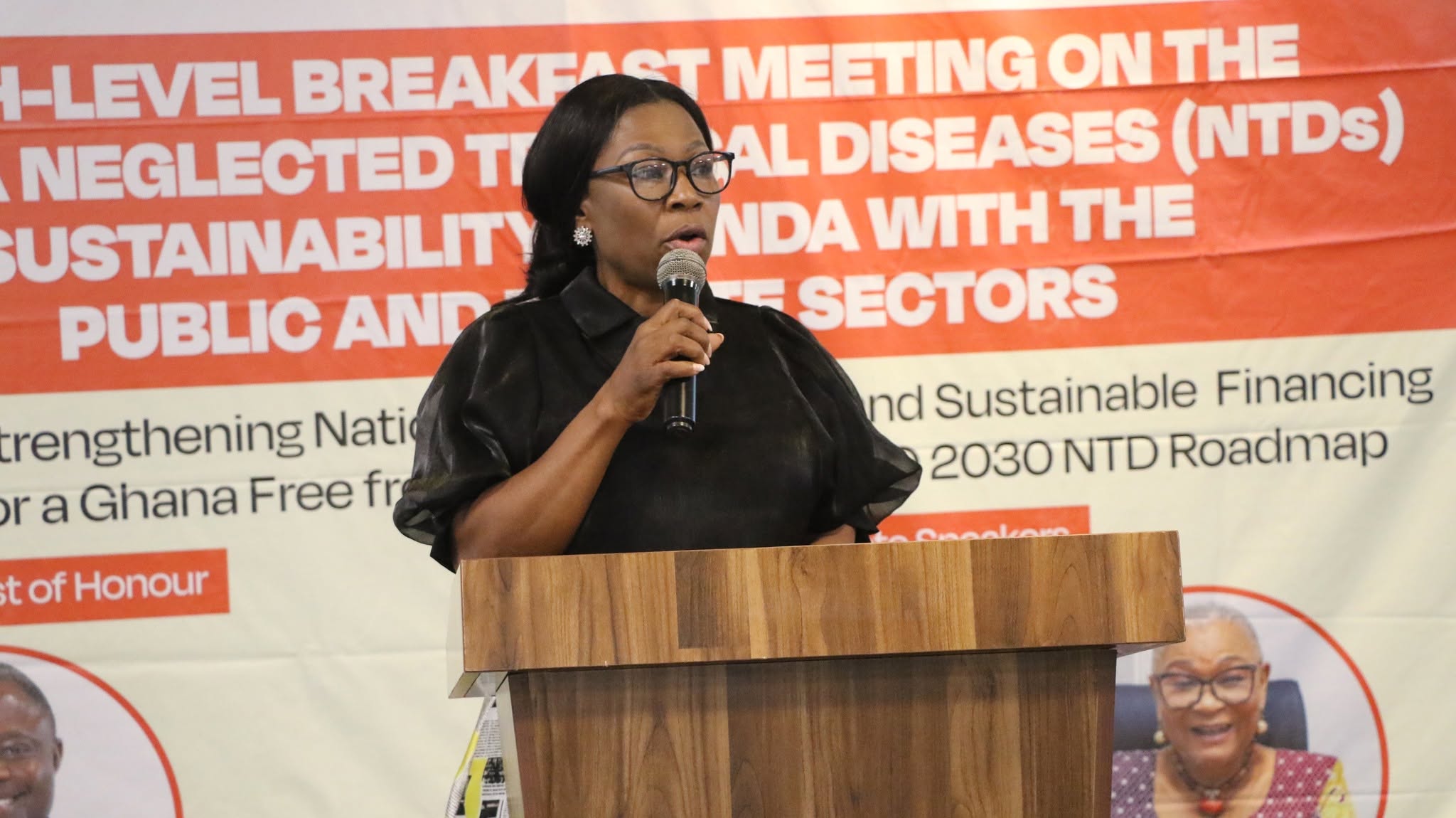
Ghana is scaling up its fight against neglected tropical diseases (NTDs), with government officials, development partners, and private‑sector actors pledging stronger collaboration and investment to meet the World Health Organization’s 2030 NTD Roadmap targets.
Speaking at a stakeholder meeting, Deputy Minister for Health, Hon. Grace Ayensu Danquah, underscored the heavy health and socioeconomic burden NTDs continue to impose, particularly on vulnerable communities. While Ghana has made progress in eliminating some NTDs, she stressed that sustaining these gains requires increased domestic financing and closer partnerships across sectors.
She urged stakeholders to make clear, practical, and time‑bound commitments, calling on private‑sector actors to support NTD programmes through funding, technology, logistics, research, and health‑system strengthening. Such investment, she noted, would protect human capital, improve productivity, and advance national development.
Dr. Hafez Adam Taher, Chairman of the Inter‑Country Coordinating Committee (ICCC) for NTDs and Technical Coordinating Director at the Ministry of Health, emphasized the need for stronger collaboration among Ministries, Departments, and Agencies. He advocated integrating NTD interventions into existing programmes in nutrition, social protection, education, water, and sanitation to safeguard vulnerable communities and consolidate Ghana’s progress.
National Ambassador for NTDs, Rev. Dr. Joyce Aryee, called for greater national ownership of the elimination agenda through domestic financing, improved coordination, and effective data sharing. She urged that NTDs be treated as a development challenge rather than “neglected diseases,” stressing the importance of sustained contributions from both government and private‑sector stakeholders.
The meeting brought together key actors to strengthen partnerships and secure practical commitments, reinforcing Ghana’s determination to achieve a future free from NTDs by 2030.
Leave a Reply