


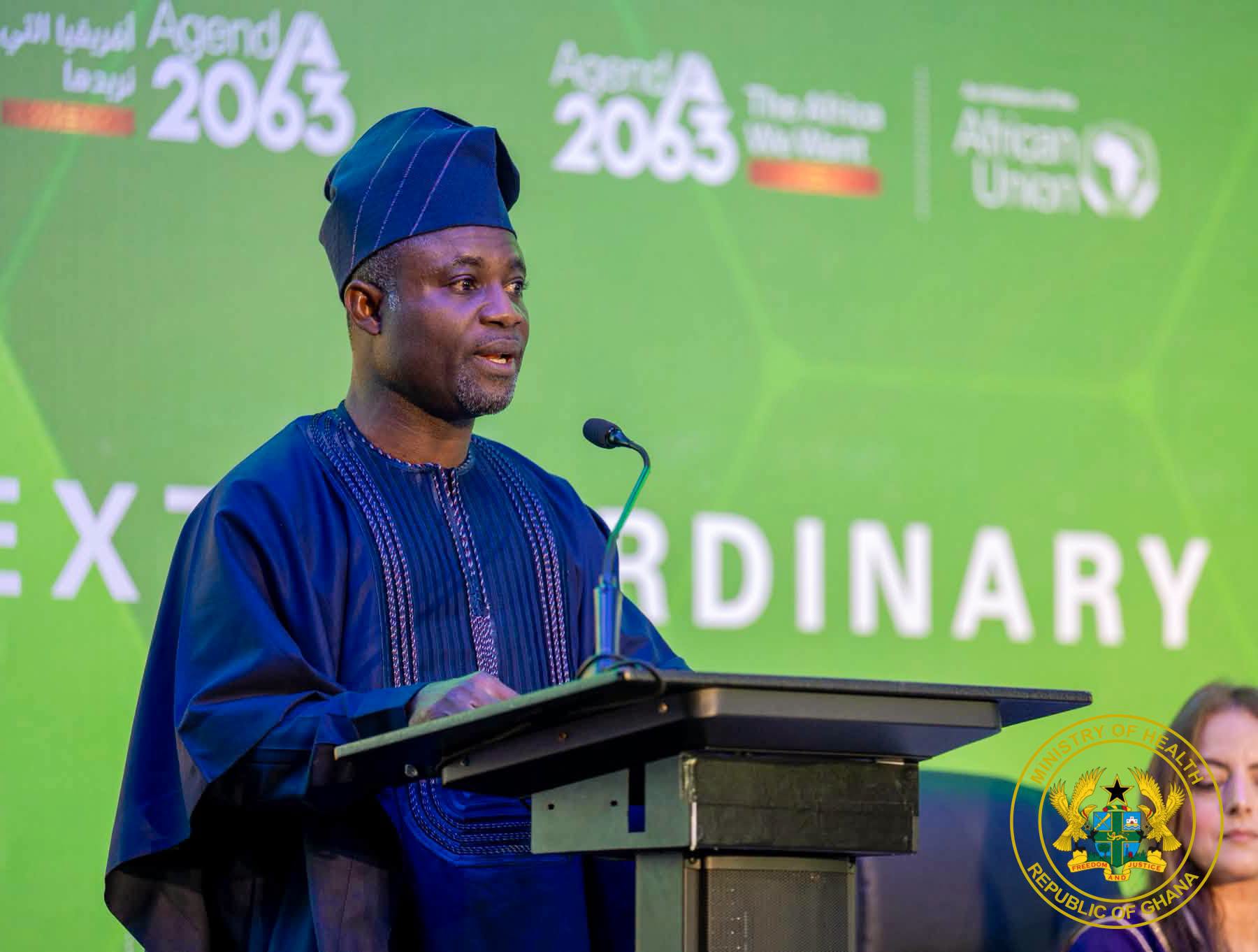
A high‑stakes dialogue on the future of healthcare in Africa is underway in Accra, where leaders have gathered for the African Union Extraordinary Summit focused on ending AIDS and tuberculosis, reducing preventable maternal deaths, and strengthening health systems across the continent.
Set against the lessons of the COVID‑19 pandemic and mounting pressure on fragile systems, the summit is centering on practical solutions — from local pharmaceutical manufacturing to community‑driven primary healthcare — as Africa pushes to meet its 2030 health targets.
Speaking at the ministerial session, Ghana’s Minister for Health, Hon. Kwabena Mintah Akandoh, declared that “the time for measured progress has passed” and urged leaders to confront the realities still facing the continent. He noted that while Africa has made significant gains in reducing HIV infections and AIDS‑related deaths, the region continues to bear nearly 70 percent of global maternal deaths, with close to 200,000 women dying each year from preventable causes.
“No woman should have to risk her life simply because she chose to give life,” he stated.
The Minister further underscored the gap in universal health coverage, pointing out that Africa’s regional index remains far below the global average, leaving many families forced to choose between healthcare and basic survival.
He called for three urgent priorities: financing health systems with domestic resources, strengthening Africa’s capacity to produce its own medicines and vaccines, and placing primary healthcare at the center of service delivery.
Hon. Akandoh stressed that the true measure of the summit’s success will not be in declarations but in tangible outcomes — whether mothers survive childbirth, whether preventable diseases are halted, and whether families are protected from poverty due to healthcare costs.
Deliberations continue tomorrow when Heads of State and Government convene for the AU Assembly, where key decisions on Africa’s health priorities are expected to be adopted, setting the course for stronger systems and accelerated action toward the continent’s 2030 health goals.