


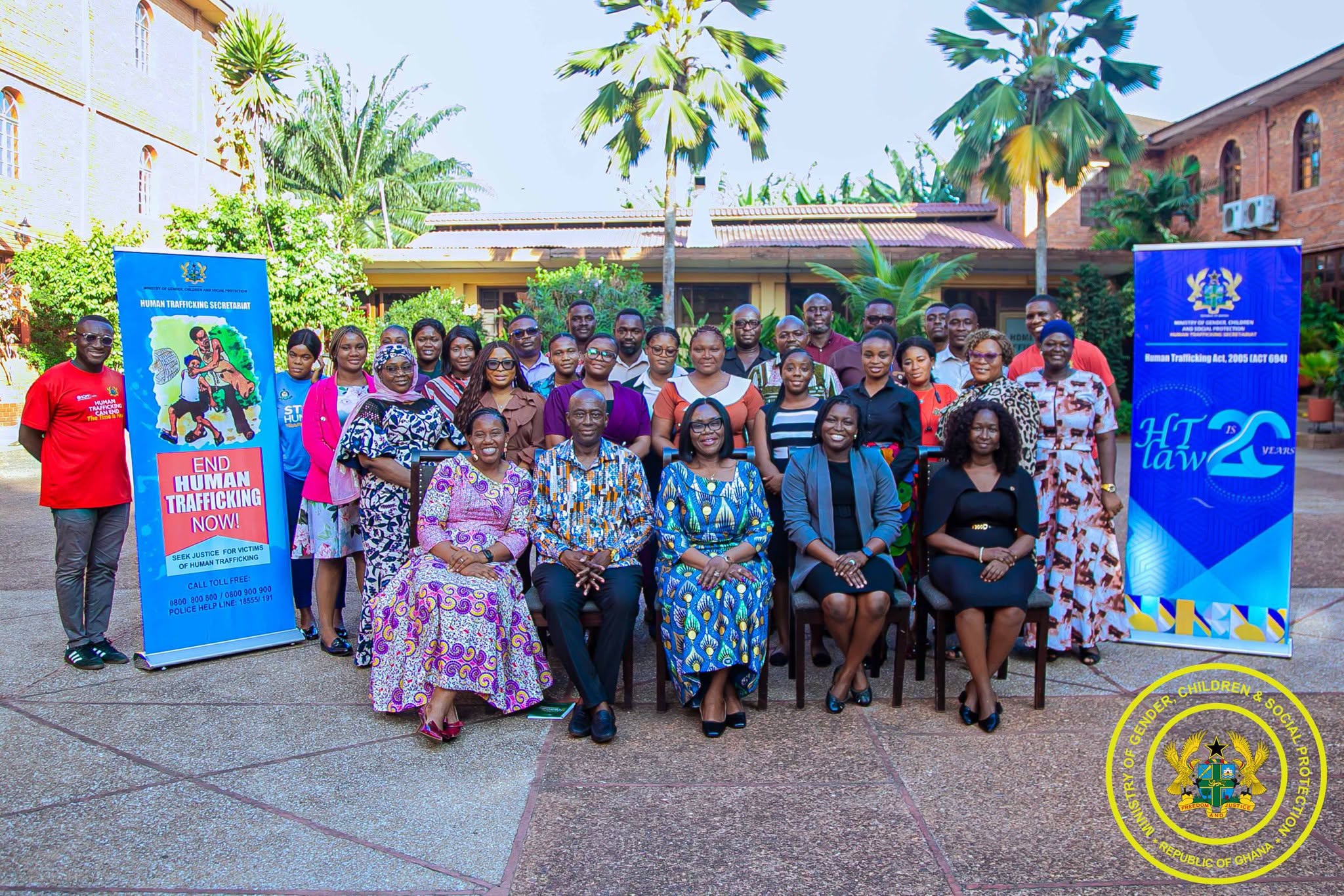
Officers drawn from key security and law enforcement agencies have undergone a two-day training programme aimed at deepening their skills in identifying, investigating and responding to human trafficking and emerging forms of exploitation.
The training, held in Accra from September 23 to 24, brought together personnel from the Ghana Police Service, the Ghana Immigration Service and other relevant institutions as part of ongoing efforts to strengthen the country’s response to trafficking in persons and irregular migration.
In a statement read on her behalf by the Chief Director of the Ministry of Gender, Children and Social Protection, Dr Marian Kpakpah, the Minister, Dr Agnes Naa Momo Lartey, said combating human trafficking demanded sustained investment in professional capacity and closer collaboration among enforcement agencies.
She urged the officers to deepen their understanding of the Human Trafficking Act, 2005 (Act 694) and the Human Trafficking Regulations, 2015 (L.I. 2219), and to sharpen their skills in victim identification, victim-centred interviewing, referrals, evidence gathering, investigations and prosecution of trafficking offences.
The Minister disclosed that the Human Trafficking Secretariat had, over the past three years, trained some 1,750 law enforcement officers drawn from the Police Service, Immigration Service, the Economic and Organised Crime Office (EOCO) and the Customs Division, in partnership with various stakeholders.
She cautioned that as traffickers continued to exploit new technologies and tactics, security agencies must remain vigilant, well-informed and professionally responsive to keep pace with evolving trends.
Also speaking at the training, the Director of the Human Trafficking Secretariat, Madam Abena Annobea Asare, took participants through the basic concepts of human trafficking in Ghana, stressing the importance of frontline officers understanding the nature and dynamics of the crime in order to identify and respond to cases appropriately.
Topics covered during the training included human trafficking and migrant smuggling, modern trends and consequences, identification and investigation of trafficking cases, child trafficking and the worst forms of child labour, investigation and prosecution of sex and labour trafficking offences, victim protection, and emerging cyber-related trafficking crimes.
The programme was organised by the Human Trafficking Secretariat of the Ministry of Gender, Children and Social Protection, in collaboration with the International Justice Mission.
Leave a Reply