


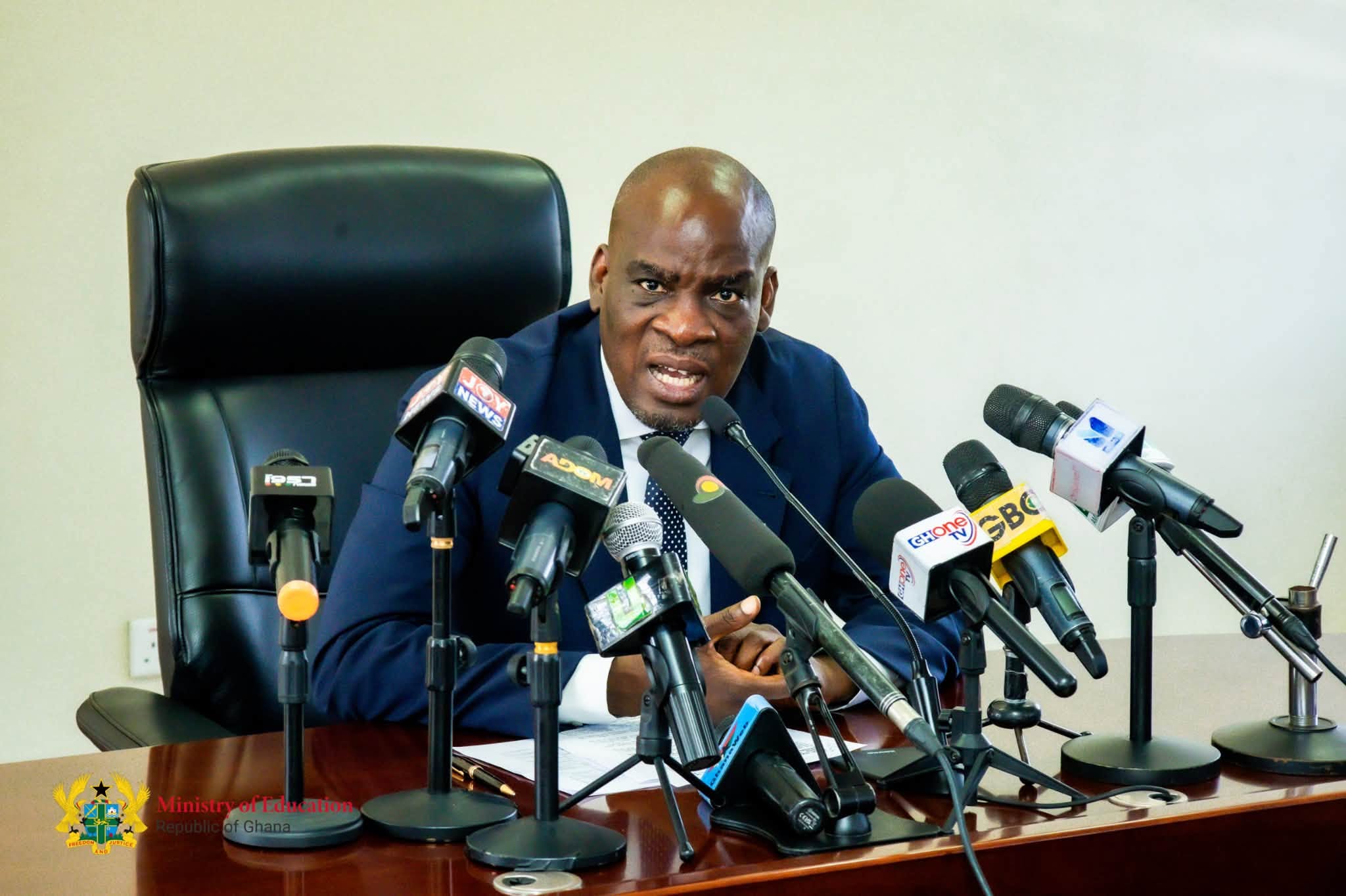
Minister for Education, Haruna Iddrisu, has dismissed claims that the government intends to replace English with Ghanaian languages as the medium of instruction in schools, describing such reports as a misrepresentation of the policy.
According to the Minister, the government is rather promoting the use of mother tongue instruction at the lower levels of basic education to strengthen literacy, comprehension and foundational learning among pupils.
“I have never said anywhere that we are substituting English for mother tongue,” Mr. Iddrisu stated, stressing that English remains an important component of Ghana’s education system.
He explained that the policy is intended to help young learners better understand concepts during their early years of schooling by allowing them to learn in languages they are familiar with, while continuing to acquire proficiency in English.
The Minister noted that extensive research has shown that children grasp concepts more effectively when taught in their native languages during the initial stages of education, laying a stronger foundation for future academic success.
Mr. Iddrisu emphasized that the objective is not to eliminate English from classrooms but to complement it through structured mother tongue instruction at the lower primary level.
The clarification follows public discussions and concerns generated by reports suggesting that the government planned to replace English with Ghanaian languages in schools.
Education experts have long advocated mother tongue-based learning in the early years, arguing that it enhances cognitive development, improves literacy acquisition and supports better learning outcomes.
The Ministry of Education maintains that the policy seeks to improve the quality of foundational education while ensuring that students continue to develop strong English language skills as they progress through the school system.