


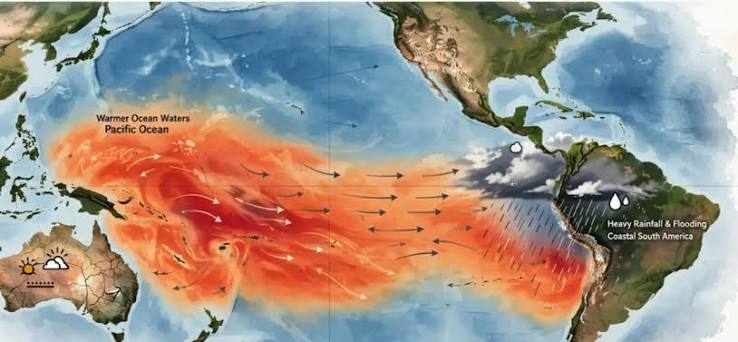
The Ghana Health Service (GHS) has issued a public health alert urging Ghanaians to take precautionary measures against the anticipated effects of the El Niño weather phenomenon, which is expected to increase health risks across parts of the country.
In a press release issued by the Ministry of Health through the GHS, the Service cited forecasts by the Ghana Meteorological Agency indicating that El Niño could trigger higher temperatures with significant public health implications.
According to the statement, the anticipated weather conditions may increase the risk of meningitis, heat exhaustion, dehydration and other climate-related illnesses. Southern Ghana could also experience prolonged dry spells and dusty conditions, while episodes of sudden rainfall and flooding may occur, requiring heightened vigilance from the public.
The GHS warned that as the country progresses into the harmattan season, the combined effects of dry weather and El Niño conditions could increase vulnerability to respiratory infections and meningitis outbreaks.
The Service therefore called on parents, teachers, traditional authorities, religious leaders, community organisations and local government authorities to intensify public education and promote preventive health practices.
Particular attention, the statement noted, should be given to communities in the Northern, Upper East, Upper West, Savannah, North East and Bono East regions, which are considered more vulnerable to the anticipated impacts.
While cautioning the public to remain alert, the GHS emphasized that the occurrence of El Niño does not automatically mean Ghana will experience a meningitis outbreak. However, it stressed that prevailing climatic conditions make early preparedness and preventive measures essential.
The Service assured the public that it would continue to monitor developments closely and provide updates as necessary.
The statement was signed by the Director-General of the Ghana Health Service, Dr. Samuel Kaba Akoriyea, who reaffirmed the institution’s commitment to safeguarding public health throughout the period.
Health experts have consistently advised the public to stay hydrated, avoid prolonged exposure to extreme heat, maintain good hygiene practices and seek early medical attention when symptoms of illness occur.
The alert comes as authorities intensify efforts to ensure communities are adequately informed and prepared for any health challenges associated with changing weather conditions.