


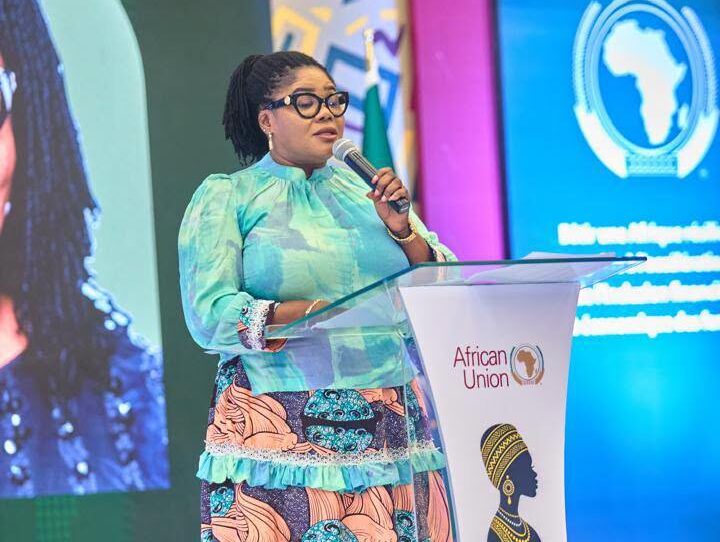
Ghana has reiterated its commitment to advancing women’s financial and economic inclusion across Africa, with the Minister for Gender, Children and Social Protection, Dr. Agnes Naa Momo Lartey, calling for stronger action to dismantle barriers that continue to limit women’s participation in economic development.
Dr. Lartey made the call at the opening of the Second Egumeni Dialogue on Gender Equality and Women’s Empowerment in Addis Ababa, Ethiopia, where she delivered a solidarity statement on behalf of President John Dramani Mahama, the African Union Champion on Gender and Development Issues in Africa.
The three-day dialogue, organised by the African Union Commission’s Women, Gender and Youth Directorate from October 19 to 21, is being held under the theme, “Building a Resilient Africa through Accelerated Women’s Financial and Economic Inclusion.” The meeting has brought together African leaders, policymakers, development partners, financial institutions, private-sector representatives and civil society organisations to discuss strategies for enhancing women’s economic empowerment across the continent.
In her address, Dr. Lartey stressed the need to address structural barriers that restrict women’s access to finance, productive resources, markets, technology, land and business development support.
She noted that eliminating such constraints was essential to enabling women to contribute fully to Africa’s economic transformation and sustainable development agenda.
Highlighting Ghana’s efforts to promote women’s economic empowerment, the Minister cited the Government’s proposed Women’s Development Bank as a flagship initiative aimed at expanding access to affordable financing for women entrepreneurs.
According to her, the initiative is expected to benefit market traders, farmers, food processors, artisans, young digital entrepreneurs and small-business operators, particularly those who face difficulties meeting the collateral requirements of traditional financial institutions.
Dr. Lartey also referenced Ghana’s National Gender Policy 2025-2034 and the Affirmative Action (Gender Equity) Act, 2024 (Act 1121), describing them as key policy frameworks for addressing gender inequalities, expanding women’s access to productive resources and promoting their participation in decision-making processes.
The Minister further underscored the importance of safeguarding the rights, safety and dignity of women as a prerequisite for their meaningful participation in economic and public life.
She pointed to Ghana’s recent deposit of its instrument of ratification of the African Union Convention on Ending Violence Against Women and Girls on September 29, 2026, as evidence of the country’s commitment to combating violence and discrimination against women and girls.
Dr. Lartey called for stronger collaboration among governments, financial institutions, development partners, private-sector actors and women’s business networks to mobilise resources, improve access to affordable financing and expand market opportunities for women across Africa.
She also urged continued support for the African Union’s Women and Youth Financial and Economic Inclusion 2030 initiative, describing it as a vital platform for accelerating progress through strategic partnerships, increased investment and sustained political leadership.
The Second Egumeni Dialogue is expected to strengthen continental cooperation and generate practical solutions for improving women’s access to finance, supporting women-owned enterprises and increasing their participation in economic decision-making.
Participants believe such efforts will contribute to poverty reduction, job creation, improved household welfare and inclusive economic growth, while building a more resilient Africa.