


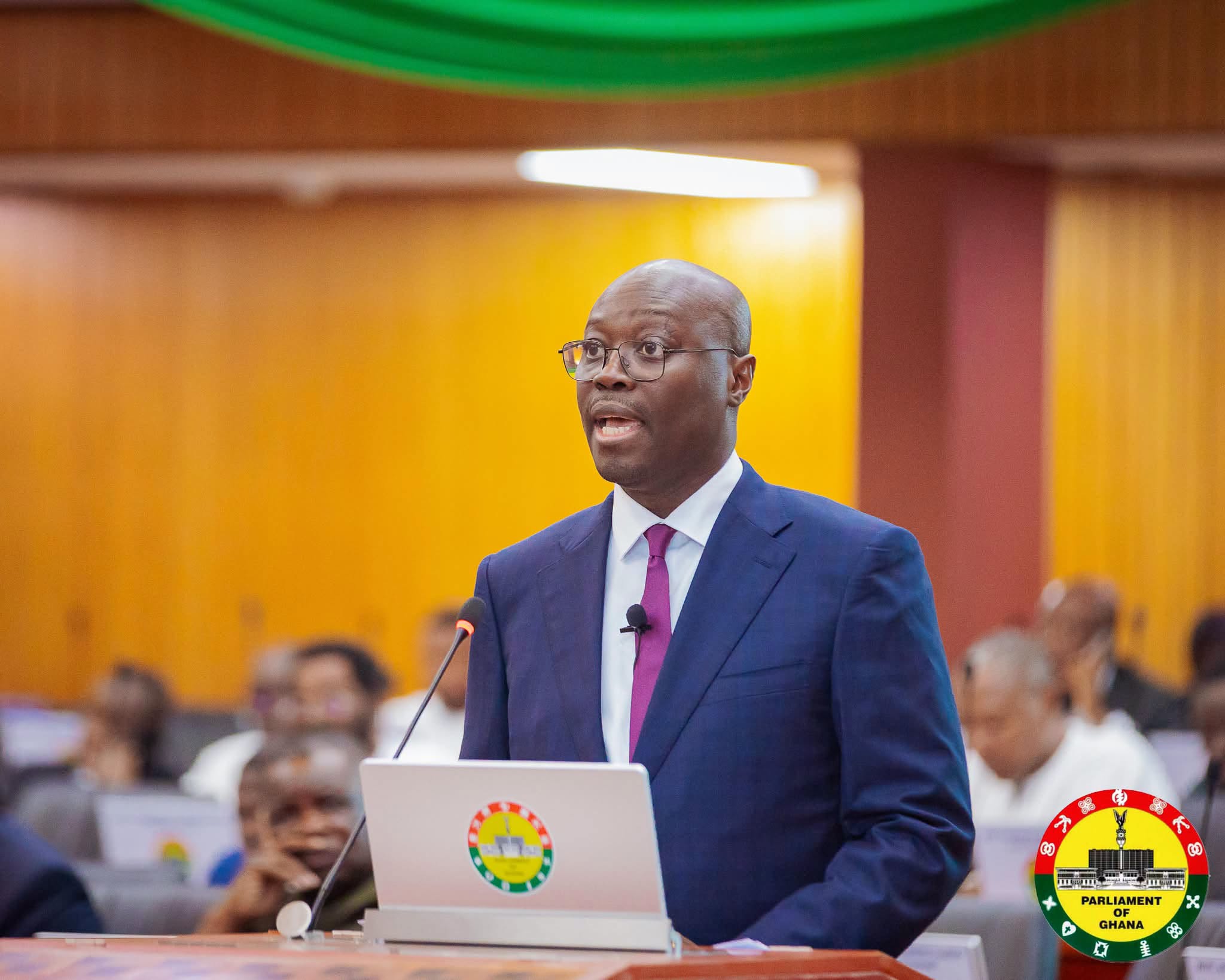
The government plans to invest US$10 billion over four years, from 2027 to 2030, to build a modern Ghanaian economy anchored on eight interconnected pillars, Finance Minister Hon. Cassiel Ato Baah Forson has disclosed.
Presenting the 2027 Budget Statement and Economic Policy of the Government, Mr. Forson said the pillars are macroeconomic stability and affordable finance; commercial agriculture; energy infrastructure; critical minerals value addition; tourism, culture and creative arts; textiles and garments; pharmaceuticals and bio-manufacturing; and the technology economy.
According to the Minister, the pillars will focus on expanding production, strengthening key industries and creating opportunities for Ghanaians.
The first pillar centres on sustaining macroeconomic stability through fiscal discipline and improved access to affordable financing for businesses. By 2030, Ghana is targeting real GDP growth of 8 per cent, an unemployment rate below 8 per cent and an investment-grade sovereign credit rating.
The second pillar, allocated US$3 billion, will focus on expanding commercial agriculture and reducing the country’s food import bill. Key targets include ending commercial rice imports and ensuring that all cocoa produced in Ghana is processed locally by 2030.
The third pillar, with US$2.2 billion allocated, seeks to strengthen energy security and reduce the cost of electricity generation from 16 US cents to 8 US cents or less per kilowatt-hour.
The fourth pillar aims to increase local processing of mineral resources to retain more value from the country’s natural wealth. A 24-hour critical minerals processing enclave will be established in the Western Region, supported by a proposed railway line linking Takoradi to Nyinahin.
Under the fifth pillar, US$1 billion has been earmarked to build on the momentum of December in Ghana and establish the Black Star Experience as a year-round tourism and cultural attraction.
The sixth pillar, also allocated US$1 billion, will go towards modernising and expanding the country’s textile and garment industry.