


Experts in public health, nutrition and media have called for stronger, evidence-informed food policies to address unhealthy diets and prevent the rising burden of non-communicable diseases (NCDs) in Ghana.
The call was made at a Media Capacity-Strengthening Workshop on Nutrient Profile Modelling, Front-of-Pack Warning Labelling and Healthy Food Policies in Ghana, which brought together media practitioners and public health experts to deepen understanding of food policy issues and strengthen media reporting.
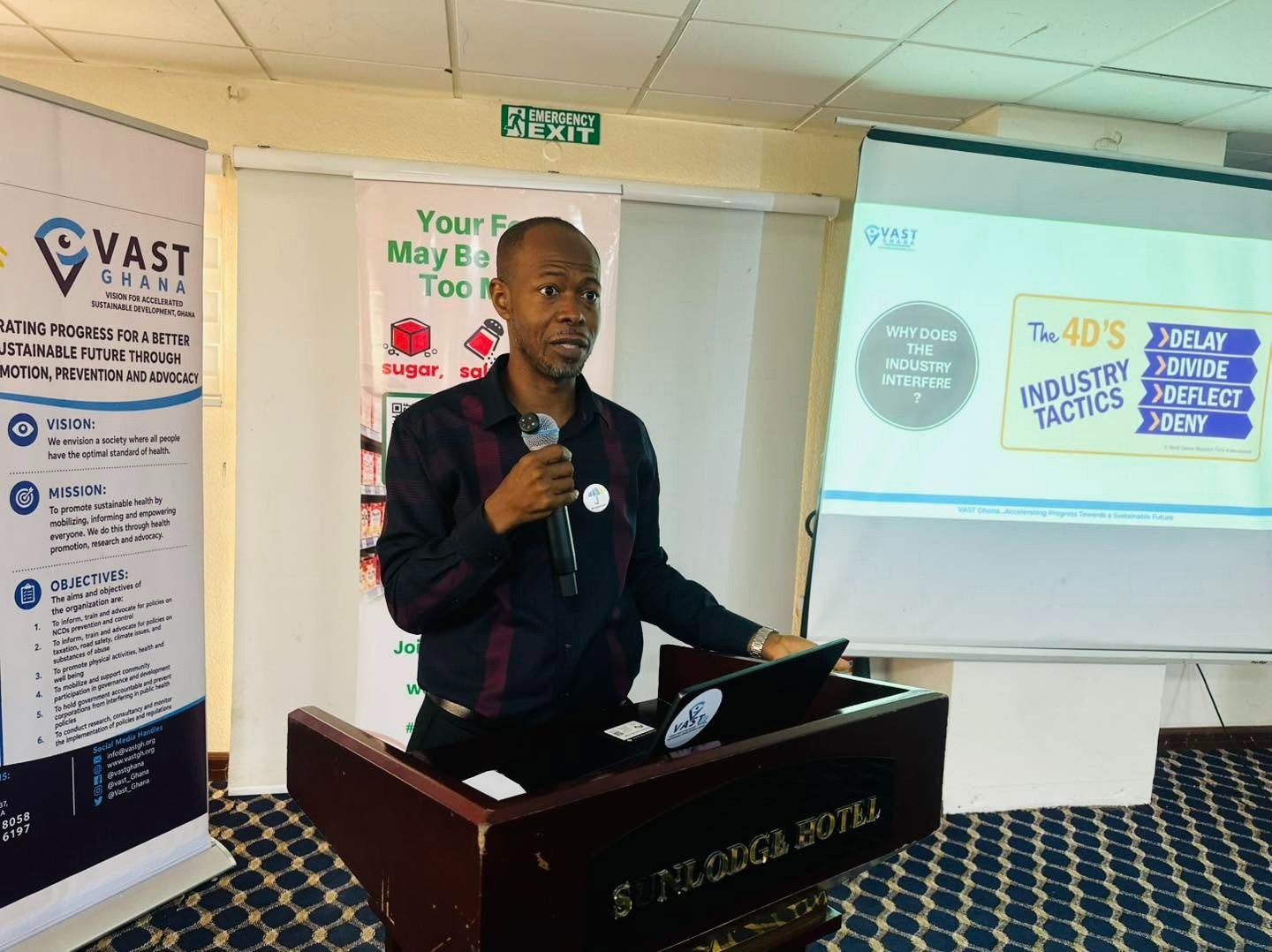
On industry interference in food policymaking, Executive Director of VAST Ghana, Mr. Labram Musah, cautioned against tactics used by some industry players to influence public health decisions.
He identified lobbying, misleading narratives, sponsorships and attempts to influence policy discussions as some of the strategies that could undermine the development of effective public health policies.
Speaking on the case for healthy food policies in Ghana, President of the Ghana Academy of Nutrition and Dietetics, Rev. Prince Baidoo, highlighted concerns over the changing food environment, characterised by the increasing availability, affordability and promotion of foods high in sugar, salt and unhealthy fats.
He noted Nutrient Profile Models (NPMs) and Front-of-Pack Warning Labelling (FOPWL) as important policy measures to help consumers make informed decisions about the foods they purchase and consume.
Policy and Research Manager at VAST Ghana, Godfred Tweneboah, also highlighted global best practices in the implementation of Front-of-Pack Warning Labelling and Nutrient Profile Models.
He emphasised the need for Ghana to adopt evidence-informed approaches aligned with international standards, while learning from countries that have successfully implemented healthy food policies.
Meanwhile, Mavis Obeng Asante of Vital Strategies called on journalists to strengthen their reporting on food policy issues by translating technical evidence into compelling and accessible stories.
She stressed that strategic media reporting is essential to improving public understanding, shaping national conversations and building support for healthier food policies.
The workshop forms part of efforts to strengthen media capacity to report accurately on nutrition-related policies and promote public awareness of measures aimed at creating healthier food environments in Ghana.