


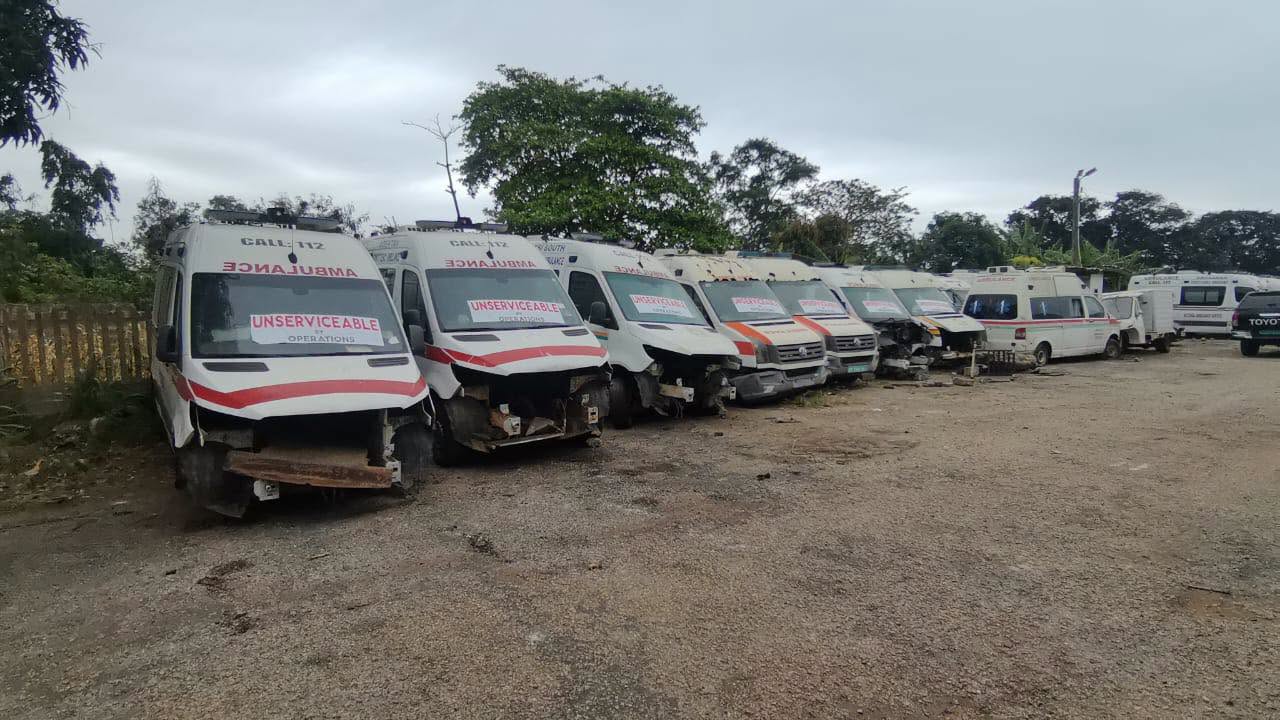
The Chief Executive Officer of the National Ambulance Service (NAS), Dr. (Med) George Kojo Owusu, has inspected ongoing works under the Service’s flagship “Operation Restore Fleet” initiative aimed at returning grounded ambulances to active service and strengthening fleet management across the country.
Leading a team of senior management staff, Dr. Owusu visited the NAS Central Workshop at Korle-Bu to assess progress made under the intensive engineering exercise.
The initiative forms part of efforts by NAS technicians and engineers to reduce vehicle downtime, restore grounded ambulances and clear the workshop of unserviceable vehicles.
During the inspection, Dr. Owusu expressed satisfaction with the pace of work and commended workshop personnel for their dedication and commitment to the restoration programme.
He noted that the operation remains on track and is already producing positive results, with significant progress made in separating serviceable vehicles from those beyond repair.
According to the CEO, the exercise is expected to improve workshop efficiency, streamline maintenance operations and strengthen overall fleet management within the Service.
Dr. Owusu also highlighted the introduction of a fleet management software system designed to enhance monitoring, maintenance scheduling and decision-making regarding the ambulance fleet.
He said the system would improve operational readiness and help ensure that ambulances remain available to provide timely emergency medical services nationwide.
As part of efforts to improve accountability and protect government assets, the Service is also implementing additional security measures at the workshop, including the installation of Closed-Circuit Television (CCTV) cameras.
The current phase of the operation focuses largely on ambulances that developed major mechanical faults after six years of intensive nationwide deployment.
Dr. Owusu explained that the primary objective is to repair and return as many ambulances as possible to active duty while ensuring that vehicles deemed beyond economic repair are properly identified and managed.
The NAS Chief Executive further acknowledged the role of the media in promoting transparency and accountability within public institutions.
He, however, stressed the need for accurate and balanced reporting on emergency medical service delivery, noting that ambulance personnel operate under demanding conditions and respond to a significant number of emergency cases daily across the country.
The “Operation Restore Fleet” initiative, he said, underscores the National Ambulance Service’s commitment to maintaining maximum operational readiness and enhancing timely emergency medical response for the benefit of all Ghanaians.
Leave a Reply