


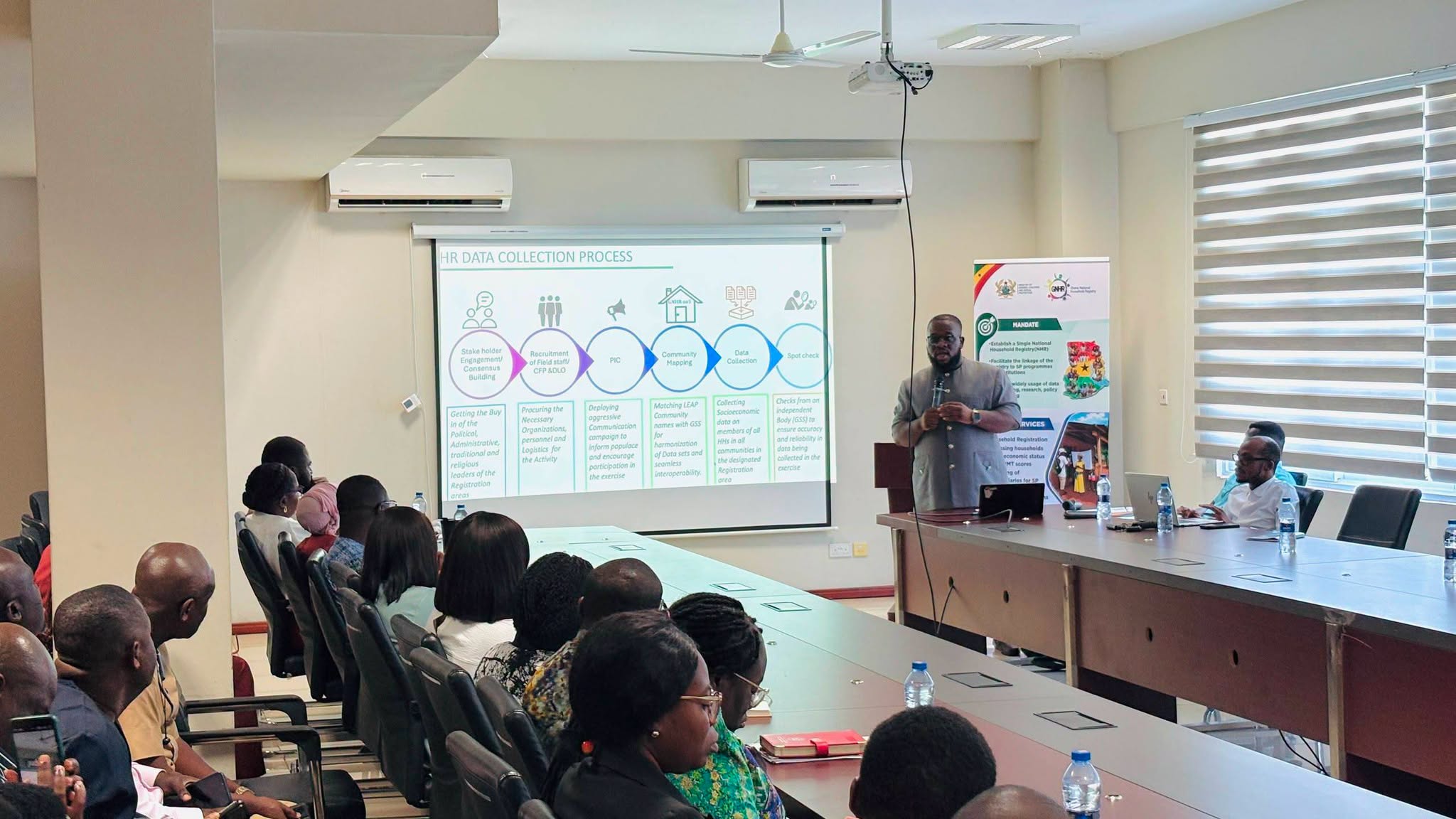
The Ghana National Household Registry (GNHR), operating under the Ministry of Gender, Children and Social Protection (MoGCSP), convened a Data Dissemination Meeting on Tuesday to share findings from its Scale-Up and Livelihood Empowerment Against Poverty (LEAP) Reassessment exercise. The event, held at the Ministry’s Conference Room in Accra, brought together stakeholders to examine how updated household data can enhance social protection delivery nationwide.
The meeting highlighted the importance of reliable data in shaping policy, planning, and programme implementation. Officials emphasized that the exercise was designed to improve targeting and ensure that government interventions reach households most in need.
In his opening remarks, GNHR Head Dr. Richard Adjetey stressed the role of accurate household information in promoting transparency and efficiency. “The Scale-Up and LEAP Reassessment exercise demonstrates our commitment to evidence-based decision-making in social protection,” he said, urging participants to engage with the findings to strengthen the visibility and credibility of GNHR’s work.
Dr. Adjetey also announced plans to extend similar dissemination sessions to other Ministries, Departments and Agencies (MDAs), Civil Society Organisations (CSOs), and partner institutions. These engagements, he explained, will help dispel misconceptions about the GNHR database and reinforce confidence in its role as Ghana’s national social registry.
GNHR Data Analyst Mr. Daniel Sackey presented key outcomes of the Scale-Up exercise, including demographic trends, achievements, and lessons learned. He outlined the LEAP Reassessment process, which verifies and updates beneficiary information to ensure continued support for households that genuinely qualify for assistance.
Participants engaged in discussions on data quality, operational challenges, and practical applications for strengthening programme responsiveness. The meeting concluded with a collective pledge to support GNHR’s mission of maintaining a credible and reliable national database for identifying and targeting beneficiaries of social protection interventions.