


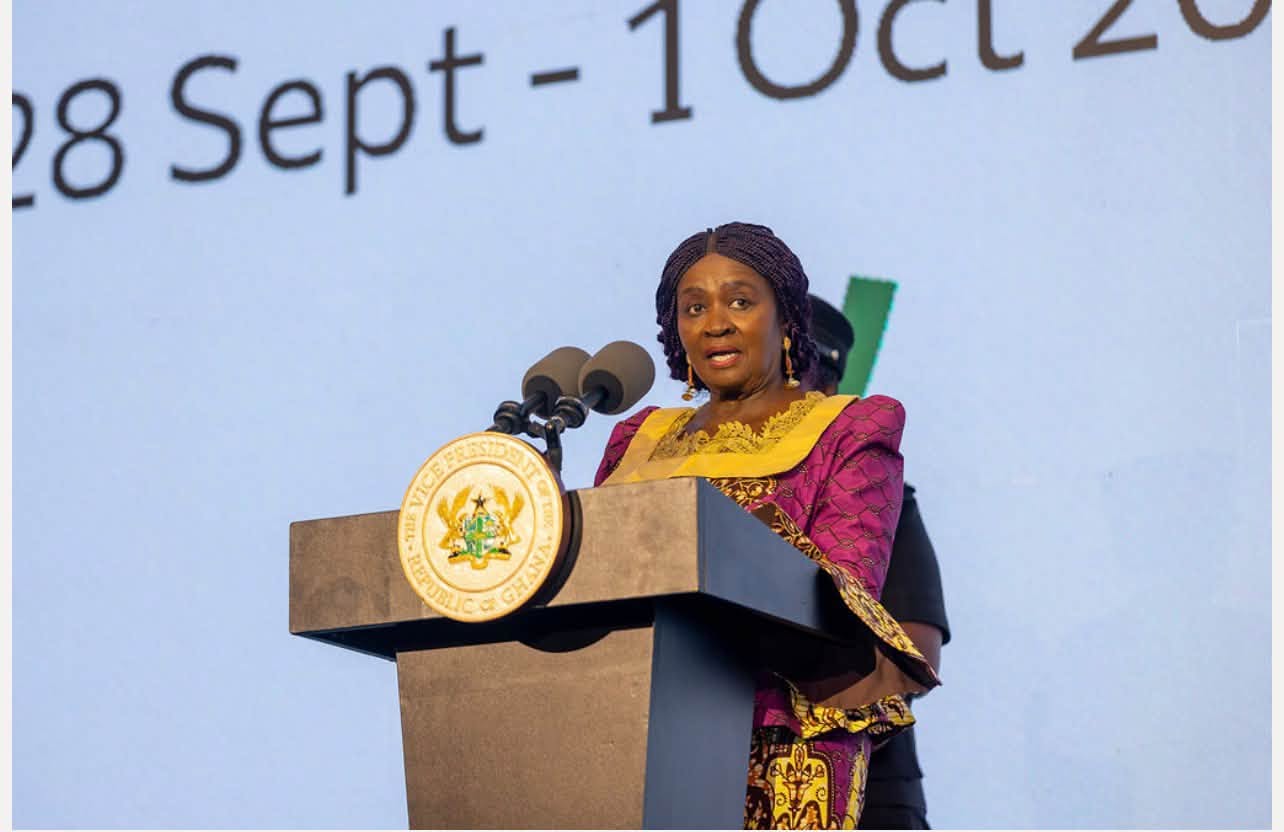
Vice President Prof. Naana Jane Opoku-Agyemang has called for intensified multisectoral collaboration and sustained investment to address malnutrition, describing it as one of the most enduring challenges to human development.
According to the Vice President, tackling malnutrition requires coordinated efforts across key sectors, including health, education, agriculture, social protection and the private sector, to achieve lasting and sustainable results.
She made the call at the opening of the 7th Global Conference of the Micronutrient Forum in Accra, being held under the theme, “Nutrition at the Frontiers of a Changing Environment.”
Prof. Opoku-Agyemang noted that the effects of malnutrition often extend beyond childhood, impacting maternal health, child development and future generations.
She stressed that addressing the challenge demands more than isolated interventions, pointing out that effective solutions must be supported by science, strong public institutions, resilient health systems and sustained financial commitment.
“More than individual interventions, solutions require science, sustained investment, strong public institutions, and resilient health systems across countries and sectors,” she stated.
The Vice President observed that nutrition outcomes are influenced by several interconnected factors, including household incomes, school feeding programmes and access to quality healthcare services.
She therefore advocated the integration of nutrition services into primary healthcare delivery, maternal and child healthcare, immunisation programmes and community-level interventions.
“There is therefore an opportunity for us to embed nutrition care into prevention, maternal care, child care, immunisation and community-level care,” she said.
Prof. Opoku-Agyemang reaffirmed Ghana’s commitment to increasing investment in essential nutrition services and improving expenditure tracking across government institutions.
She emphasized that domestic resource mobilisation and international partnerships must work together to build sustainable nutrition systems capable of delivering long-term benefits.
Highlighting the importance of social intervention programmes, the Vice President cited the Ghana School Feeding Programme, which she said currently reaches more than 4.5 million children across the country.
She noted that progress in combating malnutrition would require stronger national commitment, greater international cooperation, innovation and evidence-based policymaking.
Executive Director of the Micronutrient Forum, Saskia Osendarp, commended Ghana for its leadership in advancing nutrition initiatives and described the conference as an important platform for sharing research findings, strengthening partnerships and shaping nutrition policies.
The Acting Regional Director of AGRA, Sunil Dahiya, also highlighted the growing impact of climate change on food systems and nutrition outcomes.
He called for increased investments in climate-resilient and nutrient-rich crop varieties, improved food storage and processing systems, enhanced regional trade and innovative financing mechanisms to strengthen food security.
The four-day conference, running from September 28 to October 1, has brought together policymakers, researchers, development partners, private sector representatives and other stakeholders to examine strategies for addressing micronutrient deficiencies and improving nutrition outcomes amid changing environmental and economic conditions.
Participants are expected to share evidence, explore innovative solutions and strengthen collaboration aimed at combating malnutrition and promoting healthier populations globally.
Leave a Reply