


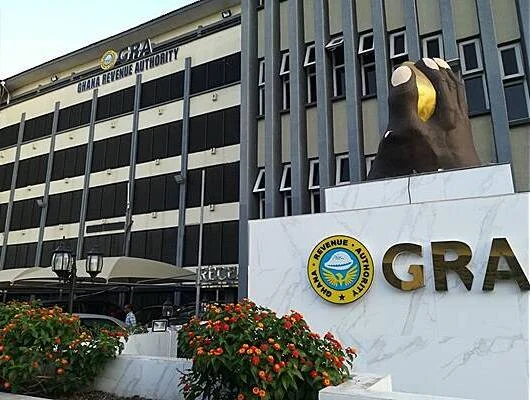
The Ghana Revenue Authority (GRA) has heightened tax enforcement and compliance operations across the country in response to increasing levels of taxpayer default, according to Assistant Commissioner for Accra Area Enforcement, Joseph Annan Adjeikwei.
Speaking to the press in Accra, Mr. Annan highlighted a troubling pattern where many taxpayers submit returns merely to avoid penalties but fail to make the actual payments.
He noted that some businesses have stopped filing altogether despite ongoing operations, while others deliberately declare far less than they are obligated to pay.
“For some time now, we relaxed our enforcement mandate to encourage voluntary compliance through education. But we realised many taxpayers are taking advantage of the system. They file but do not pay, they under-declare, or they stop filing altogether,” he said.
Mr. Annan explained that in early 2024, the Authority returned to the field to evaluate the situation and discovered that the scale of violations required additional manpower.
As a result, beginning in November, the GRA deployed more officers to intensify monitoring and ensure strict adherence to tax laws.
He stated that the reinforced enforcement drive includes arrests and, where necessary, prosecutions depending on the seriousness of the offence.
According to him, the operations run continuously—day and night, throughout the week—and cover all tax categories, including Personal Income Tax (PIT), Corporate Income Tax (CIT), Value Added Tax (VAT), excise duties, and Communications Service Tax (CST).
Mr. Annan stressed that the Authority would not relent in applying the law, underscoring that no tax system can operate effectively without consequences for offenders.
“If one person violates the law and walks free, others will follow. Our message is simple: we are out there, and taxpayers must do the right thing,” he said.
He appealed to the media to assist the Authority in educating the public about the ongoing enforcement, emphasizing that the initiative is now a permanent part of the GRA’s national mandate.
“You never know when we will visit your business, and this programme is not ending anytime soon,” he added.
Responding to questions about last year’s enforcement exercise, which saw the arrest of several non-compliant foreign businesses, Mr. Annan explained that prosecutions were not pursued at the time because it was the Authority’s first major arrest operation.
He said management granted amnesty but required all outstanding taxes to be settled.
This year, however, enforcement will be tougher, especially after months of public sensitization. Taxpayers who persist in breaking the law despite repeated warnings will be treated as defaulters, and “the law will descend heavily on them.”
On revenue losses, Mr. Annan admitted it was difficult to determine the exact figure due to the extent of non-compliance but stressed that the losses were significant.
He revealed that some taxpayers owe millions of cedis based on their own declarations, not audit findings.
“It will not be scientific to put out a figure now, but what we can say for sure is that the nation is losing so much. And this is from only a small sample of businesses we have visited,” he said.
Mr. Annan added that the Authority aims to mobilize over GH¢30 billion this month, partly to recover deficits recorded in earlier months.
He assured the public that enforcement will remain a core part of the GRA’s daily operations nationwide as the Authority works to strengthen revenue collection and improve compliance.
Leave a Reply