


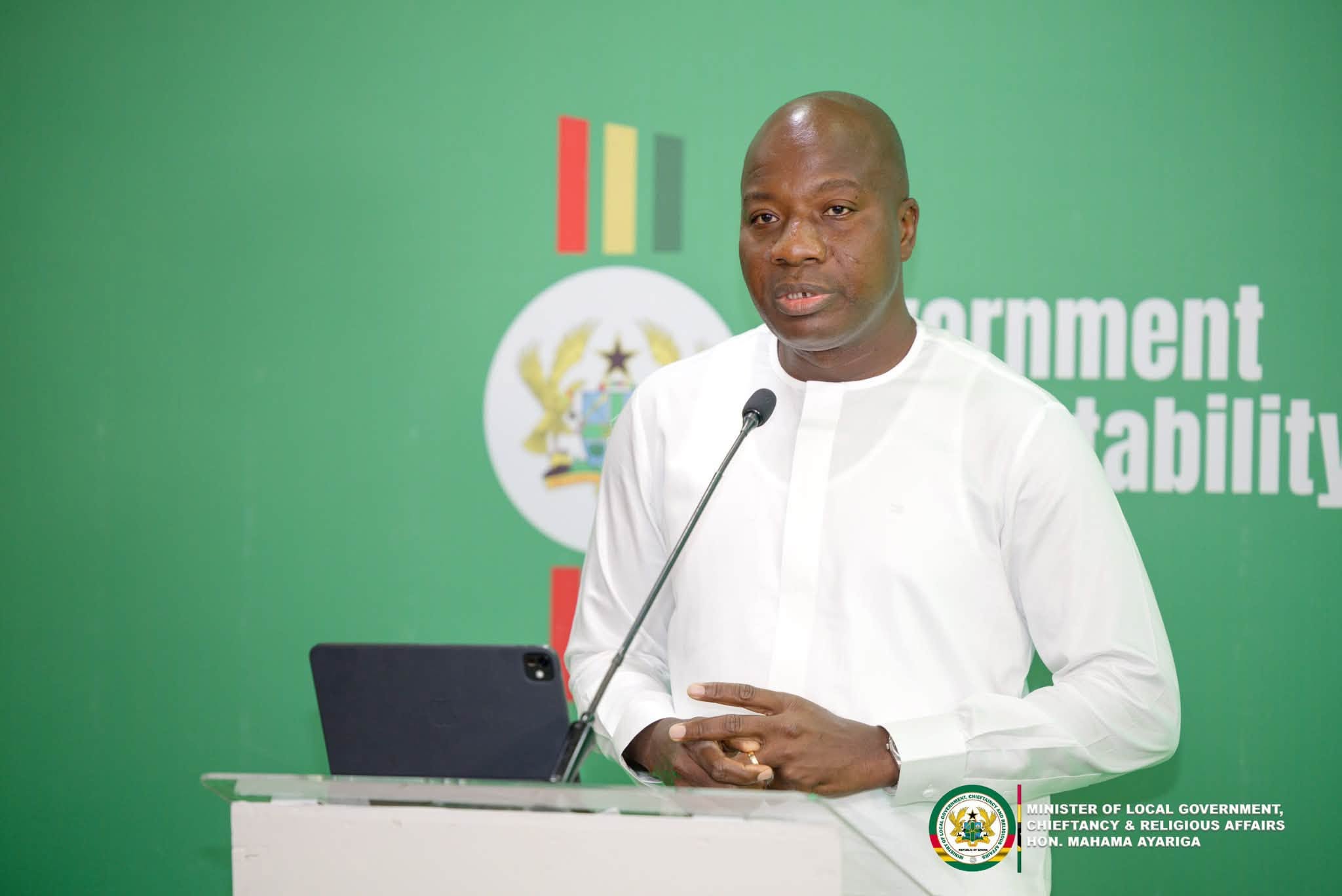
The government is advancing an ambitious programme of sanitation, infrastructure and local economic development reforms aimed at making decentralisation more meaningful and responsive to the daily needs of citizens, the Minister for Local Government, Chieftaincy and Religious Affairs, Mr Mahama Ayariga, has said.
According to the minister, a truly decentralised system must be one that citizens can experience in their everyday lives through cleaner communities, improved roads and drainage systems, reliable public transport, functioning markets, accessible healthcare and sustainable livelihood opportunities.
“Our sanitation agenda remains a major priority,” he stated, indicating that plans were underway to develop a nationwide sanitation infrastructure system comprising engineered landfill sites, waste transfer stations, improved waste collection systems and automated payment mechanisms.
He explained that beyond ensuring cleaner communities, the initiative is expected to generate at least 20,000 permanent jobs through waste management activities and the circular economy.
The minister also disclosed that the government was advancing plans for an Inner City Big Push Initiative to improve roads, drainage systems, walkways, street lighting and green spaces within urban centres.
The initiative, he noted, forms part of broader efforts to enhance urban development while exploring innovative measures to strengthen the financial capacity of Metropolitan, Municipal and District Assemblies (MMDAs).
Mr Ayariga emphasised that effective decentralisation must be supported by adequate financial resources to enable local authorities to deliver essential services and development projects.
He revealed that a total of GH¢9.1 billion from six quarters of the District Assemblies Common Fund had so far been transferred to MMDAs to support projects in the areas of health, education, water supply and sanitation.
The minister said the government’s market redevelopment programme was equally critical to strengthening local economies and improving working conditions for traders, particularly women whose livelihoods depend on market activities.
He further highlighted efforts to strengthen traditional governance systems, improve urban mobility through initiatives such as the Ayalolo contra-flow system, and enhance property-rate collection through more efficient, transparent and convenient processes.
Mr Ayariga reaffirmed the government’s commitment to building local government institutions that are responsive, accountable and adequately resourced to drive community transformation.
“The reset is underway, and the work continues,” he said.