


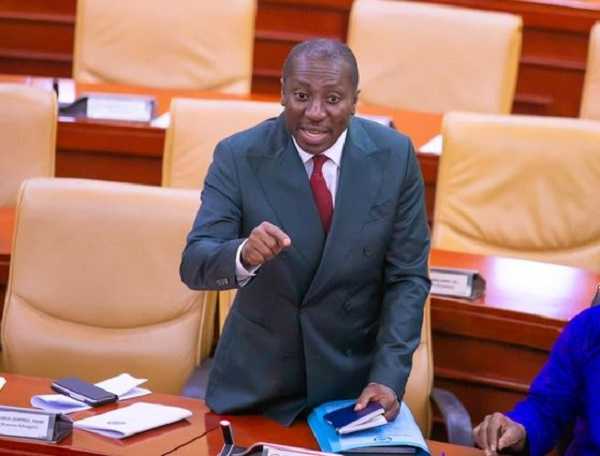
Minority Leader and Member of Parliament for Effutu, Alexander Afenyo-Markin, has raised concerns about the state of Ghana’s democracy, warning that the country risks sliding into “retribution” politics just a year after voters ushered in political change.
In a strongly worded statement titled “One Year After: Ghana’s Democracy at the Crossroads,” Mr. Afenyo-Markin said Ghanaians voted for change in the last election, but questioned whether the country is getting genuine transformation or political vendetta.
Reflecting on the transfer of power and President John Dramani Mahama’s inauguration on January 7, 2025, the Minority Leader said while he respected the will of the people, he is troubled by what he described as a growing pattern of politically motivated dismissals.
He accused the government of engaging in what he termed a “purge” of public sector workers, claiming that thousands of state employees had been dismissed without due process. He also criticised the removal of the Chief Justice and warned that similar threats now hang over senior officials at the Electoral Commission and the Office of the Special Prosecutor.
According to him, the focus of government appears to be settling political scores rather than pursuing development pledges such as the promised 24-hour economy, industrial expansion and job creation for young people.
Addressing President Mahama directly in the statement, Mr. Afenyo-Markin described the President’s political comeback as “historically rare” and urged him to treat his return to office as a second chance to build a lasting legacy rather than oversee what he called an “administration of removals.”
He compared the legacies of former presidents, citing the National Health Insurance Scheme under President John Agyekum Kufuor and the Free Senior High School policy under President Nana Addo Dankwa Akufo-Addo, and challenged President Mahama to define his own enduring contribution to national development.
Mr. Afenyo-Markin concluded by warning that history would judge President Mahama’s administration not by the number of arrests or dismissals, but by the policies and institutions it leaves behind to improve the lives of Ghanaians.
Leave a Reply