


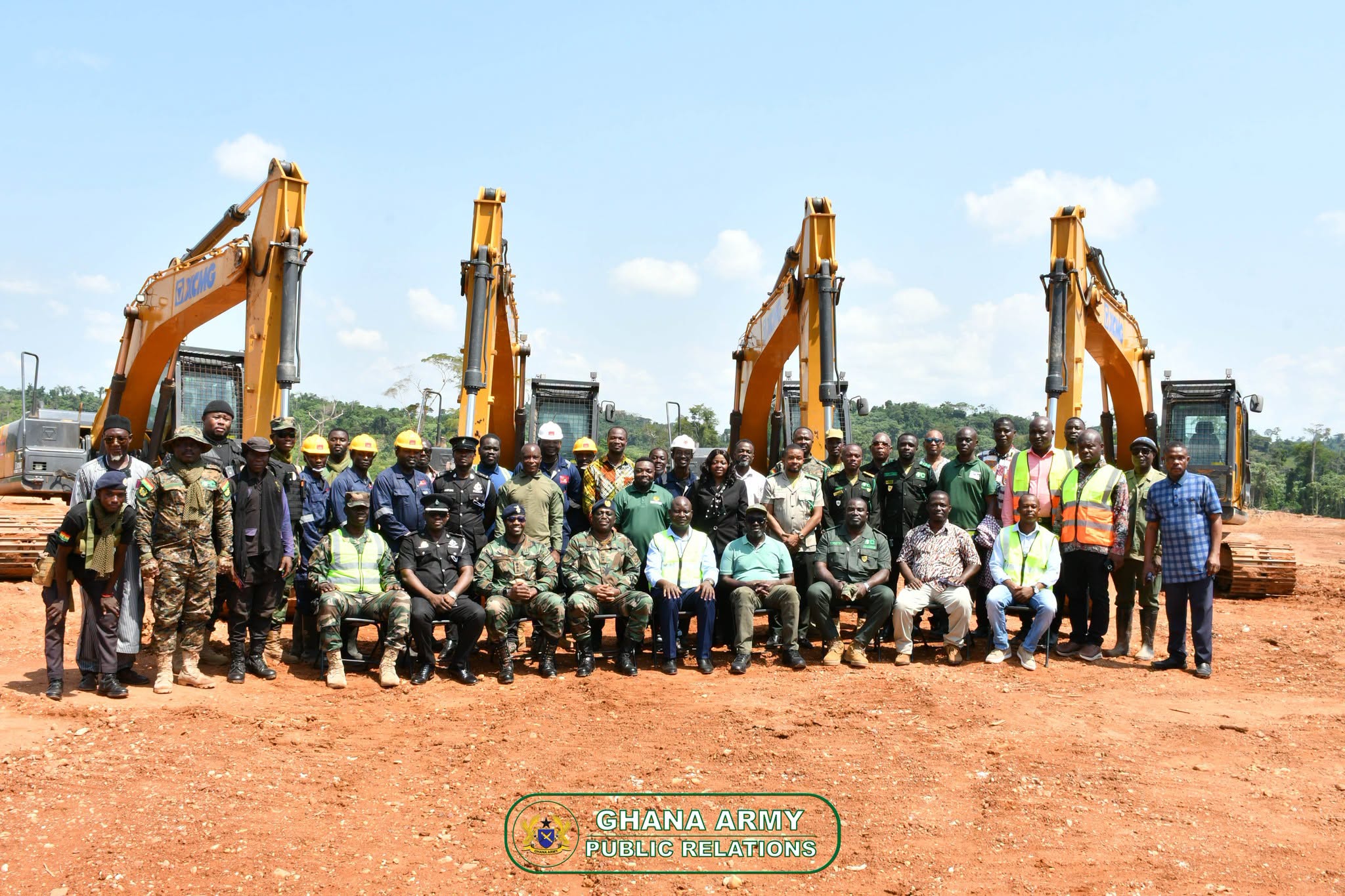
The Ghana Armed Forces’ 14 Engineer Brigade has successfully reclaimed 50 hectares of land degraded by illegal mining activities at Tano-Nimiri, marking a significant milestone in efforts to restore damaged forest reserves and curb environmental destruction.
The reclaimed land, together with a newly constructed Forward Operating Base (FOB), was formally handed over to the Ghana Gold Board (GoldBod) during a ceremony held on Wednesday, November 18, 2026, to mark the completion of the first phase of the restoration project.
The reclamation exercise involved extensive engineering works to rehabilitate land devastated by abandoned mining pits and disrupted watercourses. The project also opened up an area that had become largely inaccessible due to illegal mining activities.
As part of the intervention, the 14 Engineer Brigade constructed 13.6 kilometres of access roads to facilitate movement within the difficult terrain. Engineers excavated and backfilled abandoned mine pits, reshaped and graded disturbed land, improved drainage systems, spread topsoil and reopened blocked watercourses to restore the natural flow of water through the area.
Speaking at the handover ceremony, the Commander of the 14 Engineer Brigade, Brigadier General Richard Kinney, described the degradation of forest reserves by illegal mining as a major threat to the environment and national development.
He said the successful completion of the project demonstrated the dedication, discipline and professionalism of the Ghana Armed Forces engineering team.
Brig Gen Kinney, however, stressed that the long-term success of the intervention would depend on protecting the reclaimed land from renewed illegal mining activities.
“The greater challenge ahead is to conserve and protect the reclaimed area,” he said, calling on the Forestry Commission to maintain a sustained presence to safeguard the gains made through the exercise.
The newly constructed Forward Operating Base, designed to accommodate 10 personnel, is equipped with a borehole, solar power system, kitchen and washroom facilities. The facility will serve as a base for Forestry Commission officers tasked with monitoring and protecting the reclaimed area.
Deputy Director for Responsible Mining and Sustainability at GoldBod, James German, said the Board remains committed to supporting the formalisation and sustainable development of Ghana’s artisanal and small-scale mining sector.
He underscored the importance of an integrated approach to environmental restoration, noting that reclaiming degraded land must go hand in hand with efforts to prevent further destruction.
Mr. German commended Brig Gen Kinney, the project team and all personnel involved in the reclamation exercise, while also acknowledging the contributions of the Forestry Commission and other stakeholders.
He noted that although reclaiming degraded land was a major achievement, restoring its ecological value would ultimately determine the project’s success.
“The Tano-Nimiri project demonstrates that environmental restoration is achievable when institutions work together towards a common goal,” he said.
Mr. German further emphasized the need to protect larger forest areas that remain vulnerable to illegal mining activities.
The Managing Director of SAMARTEX, Richard Nsenkyire, described the handover as a landmark achievement for both the company and Ghana’s forestry sector.
He expressed gratitude to the Government and stakeholders for helping reclaim the company’s timber concession from illegal miners, noting that the project provides an opportunity to restore degraded forests while promoting sustainable economic development.
Mr. Nsenkyire reaffirmed SAMARTEX’s commitment to collaborating with stakeholders to rehabilitate affected areas and contribute to rebuilding Ghana’s forest resources.
As part of the ceremony, certificates were exchanged to formally commemorate the handover, with Brig Gen Kinney receiving recognition for the Brigade’s reclamation efforts.
GoldBod announced that the reclaimed land would subsequently be handed over to the Forestry Commission to commence afforestation and tree-planting activities. The restoration programme will continue under a 10-year monitoring and management arrangement aimed at supporting ecological recovery and ensuring the long-term protection of the area.
The project is being hailed as a major victory in Ghana’s fight against illegal mining and a model for future environmental restoration initiatives across the country.